Breathing, Balance, and Natural Nose Shape
Rhinoplasty is not just about changing the shape of the nose.
At a medical level, it is about balancing facial harmony while preserving—or improving—breathing function.
The most successful rhinoplasty results are the ones you don’t notice.
They simply look natural, balanced, and right for the face.
⸻
What Is Rhinoplasty?
Rhinoplasty is a surgical procedure that reshapes the nose to improve:
- Facial balance and proportion
- Nasal symmetry
- Breathing function
- Structural issues from trauma or birth
Modern rhinoplasty combines aesthetic design with functional correction.
⸻
Cosmetic vs Functional Rhinoplasty
Aesthetic Rhinoplasty
Focuses on:
- Nose size and shape
- Bridge and tip refinement
- Symmetry and proportion
Functional Rhinoplasty
Addresses:
- Breathing difficulties
- Deviated septum
- Internal nasal valve collapse
In many cases, both goals are achieved in the same procedure.
⸻
Why Breathing Must Come First
A beautiful nose that compromises breathing is not a successful result.
Professional rhinoplasty:
- Preserves nasal support structures
- Maintains airflow pathways
- Avoids over-resection
Function-first planning protects long-term comfort and health.
⸻
Nose Shape Is About Proportion — Not Trends
There is no “perfect nose.”
The ideal nose:
- Fits facial proportions
- Matches gender and ethnicity
- Ages naturally over time
Trend-based noses often look unnatural and age poorly.
⸻
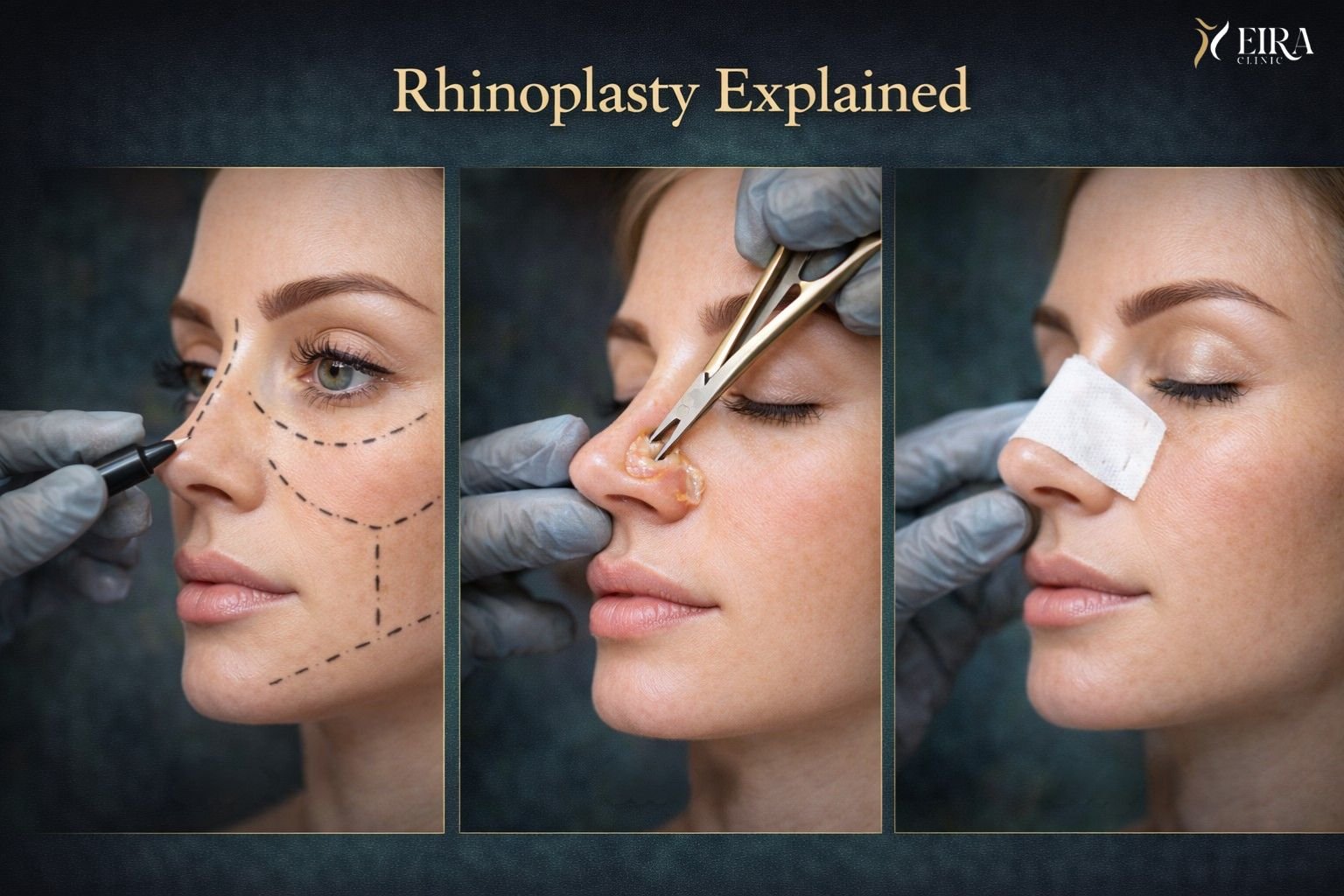
Open vs Closed Rhinoplasty
Open Rhinoplasty
- Provides full surgical visibility
- Used for complex reshaping
- Offers precise structural control
Closed Rhinoplasty
- No external incision
- Faster recovery in selected cases
- Suitable for limited adjustments
The approach depends on anatomy and surgical goals.
⸻
The Importance of Pre-Operative Analysis
Successful rhinoplasty requires:
- Facial analysis
- Nasal structure assessment
- Skin thickness evaluation
- Breathing function testing
Digital planning helps align expectations with achievable outcomes.
⸻
Recovery and Healing Timeline
Rhinoplasty healing is gradual:
- Initial swelling and bruising (first weeks)
- Subtle swelling reduction over months
- Final shape refinement up to 12 months
Patience is essential — the nose evolves with healing.
⸻
Common Rhinoplasty Myths
“Smaller is always better.”
❌ False. Over-reduction harms function and aesthetics.
“Results are immediate.”
❌ False. Final results take time to settle.
“Rhinoplasty is only cosmetic.”
❌ False. Function is equally important.
⸻
Frequently Asked Questions (FAQ)
Will rhinoplasty affect my breathing?
When done correctly, breathing is preserved or improved.
Is the scar visible?
In open rhinoplasty, the scar is minimal and fades well.
Can revision be avoided?
Proper planning significantly reduces revision risk.
⸻
Final Thoughts
Rhinoplasty is one of the most demanding procedures in plastic surgery.
It requires:
- Surgical precision
- Artistic judgment
- Respect for function
The best rhinoplasty doesn’t announce itself —
it simply brings balance, comfort, and confidence.