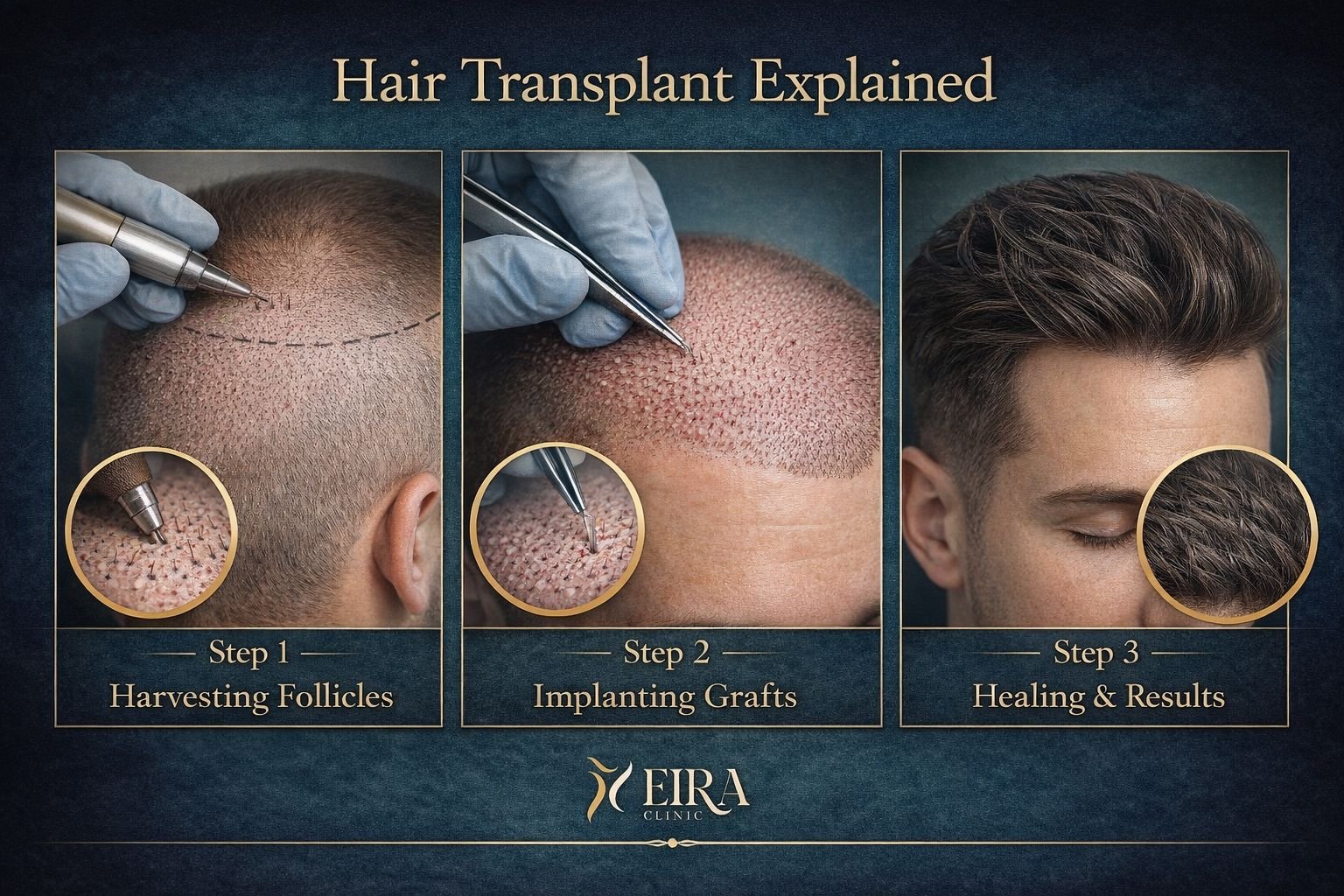
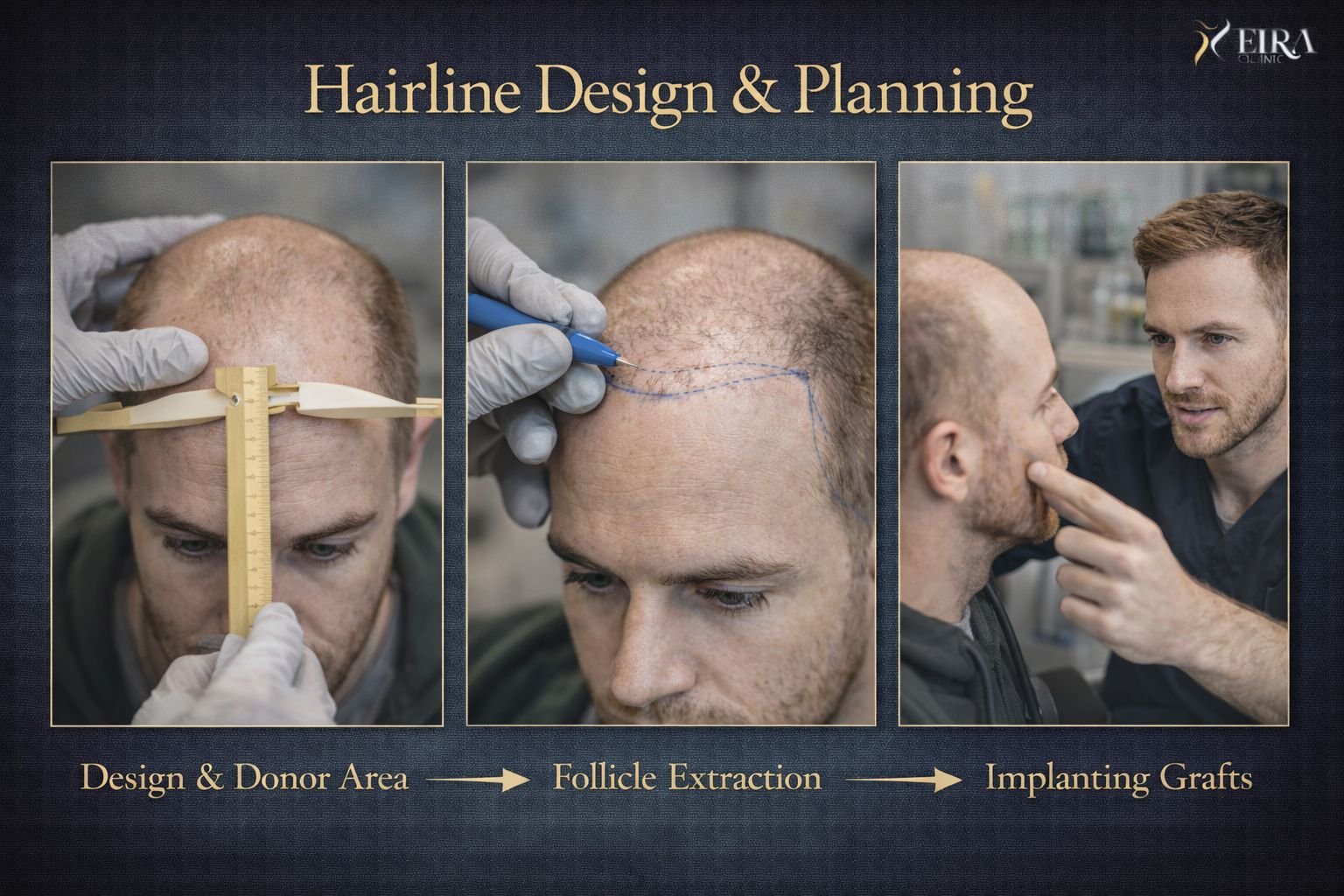
The Real Key to Natural Hair Transplant Results
No matter how advanced the technique is —
a poorly designed hairline will always look unnatural.
Hairline design is not drawing a straight line and filling it with hair.
It is a medical–aesthetic decision based on anatomy, age, future hair loss, and facial harmony.
This is where great results are made — or destroyed.
⸻
Why Hairline Design Matters More Than Technique
Patients often ask:
“Which technique is better — FUE or DHI?”
The honest answer:
Hairline design matters more than the technique used.
You can use the best tools in the world —
but if the hairline is wrong, the result will never look natural.
⸻
What Makes a Hairline Look Natural?
A natural hairline is:
- Irregular, not perfectly straight
- Slightly asymmetrical
- Age-appropriate
- Soft at the front, denser behind
- In harmony with facial proportions
Nature never draws straight lines — and neither should surgeons.
⸻
Factors That Define Proper Hairline Design
1️⃣ Age and Future Hair Loss
A hairline suitable at 25 may look unnatural at 40.
Design must consider:
- Current age
- Family hair loss pattern
- Future recession
Overly low hairlines are one of the biggest long-term mistakes.
⸻
2️⃣ Facial Proportions
Hairline position affects:
- Forehead height
- Face shape
- Overall balance
The goal is harmony, not maximum coverage.
⸻
3️⃣ Gender-Specific Design
Male and female hairlines are different.
Male hairlines
- Slight recession at temples
- Mature contour
Female hairlines
- Softer, rounded shape
- Higher density at the front
Ignoring gender differences leads to artificial results.
⸻
4️⃣ Natural Irregularity
Natural hairlines include:
- Micro- and macro-irregularities
- Single-hair grafts in the front
- Gradual density transitions
This creates softness and realism.
⸻
Density Planning: More Is Not Always Better
High density at the hairline can look fake.
Professional planning uses:
- Single-hair grafts at the front
- Increasing density gradually
- Respecting blood supply
Natural density is about distribution, not numbers.
⸻
Hair Direction and Angle: The Invisible Detail
Even a perfectly placed hairline fails if:
- Angles are wrong
- Direction is unnatural
Front hair grows forward and slightly upward —
small angle mistakes are immediately noticeable.
⸻
Why Copy-Paste Hairlines Fail
Some clinics reuse the same hairline for every patient.
This leads to:
- Identical-looking results
- Unnatural appearance
- Poor aging over time
Each face requires a custom design.
⸻
Hairline Design Is a Medical Responsibility
Ethical planning sometimes means:
- Saying no to unrealistic requests
- Designing a conservative hairline
- Protecting future donor reserves
The goal is not instant satisfaction —
it is lifelong natural appearance.
⸻
Frequently Asked Questions (FAQ)
Can I choose my own hairline shape?
Yes — but final design should be guided by medical expertise.
Can a bad hairline be corrected later?
Correction is possible, but prevention is always better.
Does hairline design affect graft count?
Yes. Proper design uses grafts efficiently and safely.
⸻
Final Thoughts
Hairline design is the signature of a hair transplant.
Techniques may change.
Tools may evolve.
But a well-designed hairline remains natural for life.
The best results don’t draw attention —
they simply look right.