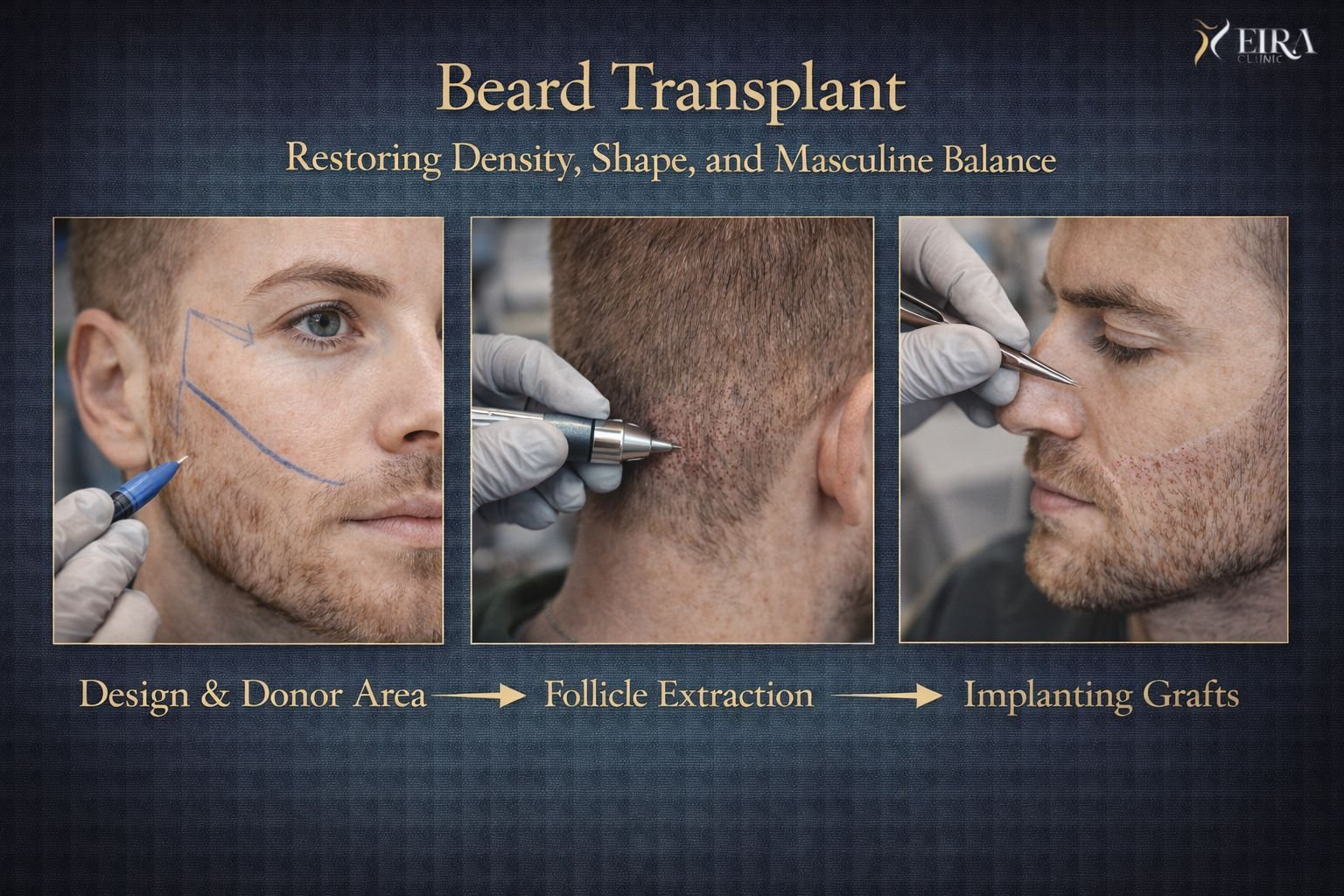
Restoring Density, Shape, and Masculine Balance
A full, well-shaped beard is more than facial hair —
it’s a defining feature of masculinity, balance, and identity.
For men with patchy growth, scars, or genetically weak beards, beard transplant surgery offers a permanent, natural solution using their own hair follicles.
⸻
What Is a Beard Transplant?
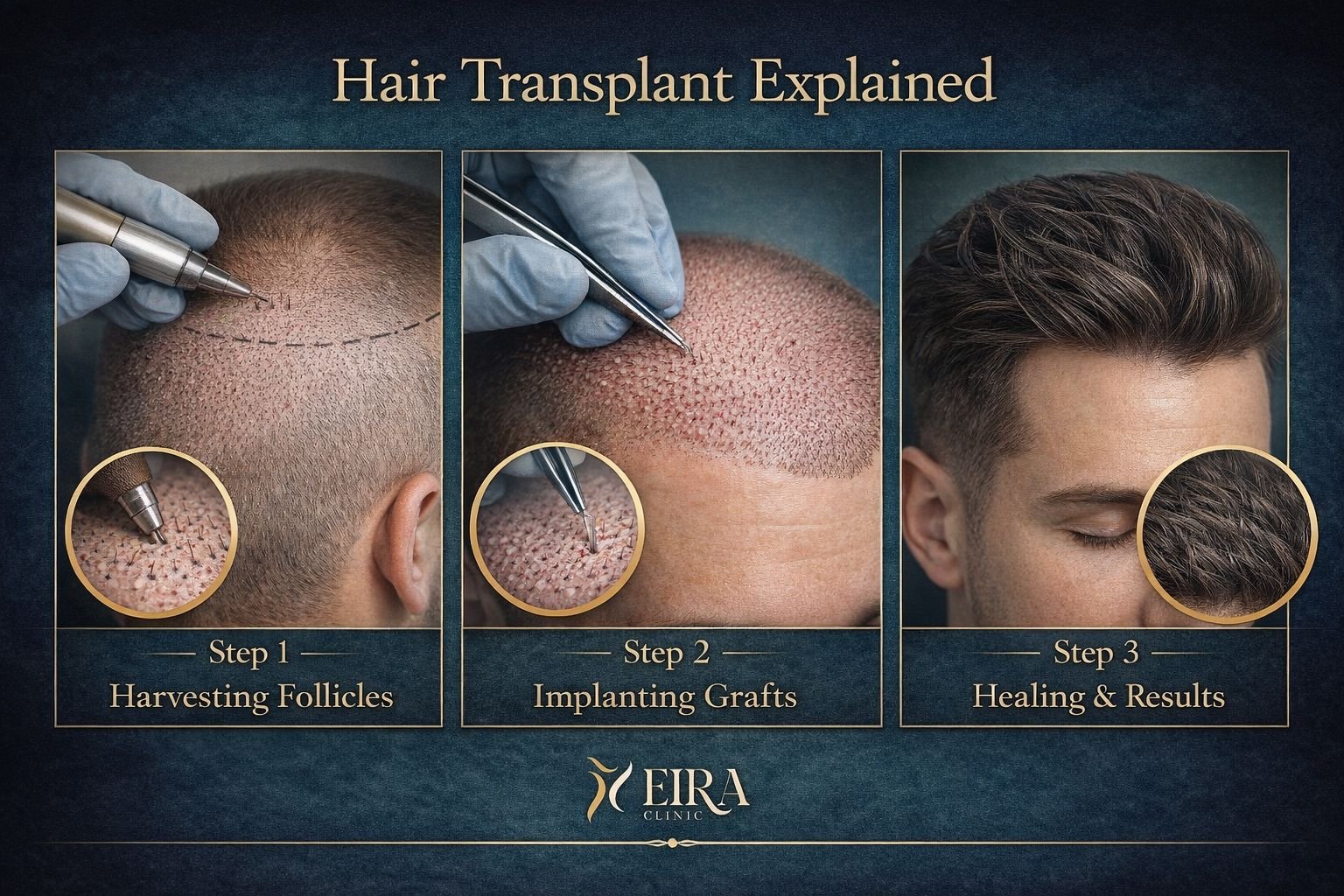
A beard transplant is a procedure where healthy hair follicles are taken from a donor area (usually the back of the scalp) and implanted into areas of the beard that lack density or definition.
Key principle:
Scalp hair follicles adapt to beard growth when implanted correctly.
Once healed, transplanted hair grows naturally and permanently.
⸻
Who Is a Good Candidate for Beard Transplant?
Beard transplant is suitable for men who:
- Have patchy or uneven beard growth
- Cannot grow a full beard due to genetics
- Want to restore beard density after scars or burns
- Desire better beard shape and symmetry
- Have sufficient donor hair quality
A professional assessment ensures realistic expectations and safe planning.
⸻
The Importance of Beard Design
Beard transplantation is as much design as it is surgery.
Professional planning considers:
- Face shape and proportions
- Jawline definition
- Cheek and neckline borders
- Natural beard growth patterns
- Density transitions (not “painted-on” look)
Natural results depend on angle, direction, and spacing.
⸻
How Beard Transplant Is Performed
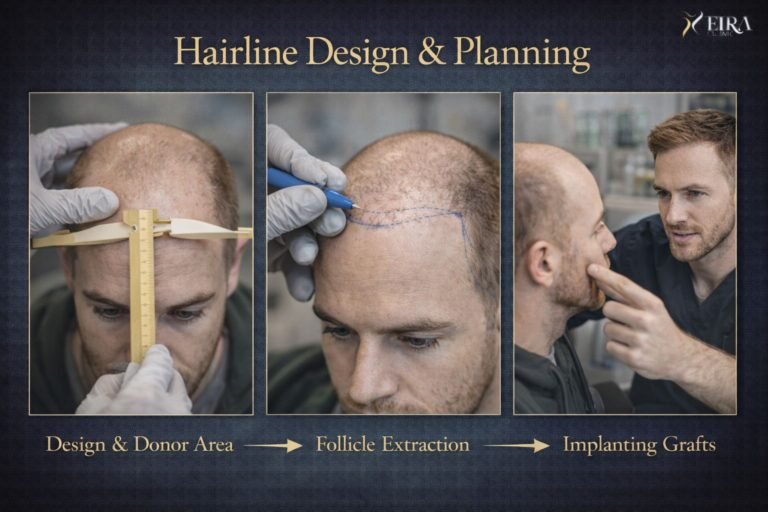
Step 1️⃣ Donor Area Extraction
Follicles are harvested individually using FUE-based techniques to avoid visible scarring.
⸻
Step 2️⃣ Beard Area Planning
The beard outline, density zones, and growth direction are carefully mapped.
⸻
Step 3️⃣ Follicle Implantation
Grafts are implanted at precise angles to mimic natural beard hair growth.
Incorrect angles are the most common cause of unnatural results.
⸻
Healing and Growth Timeline
Typical recovery includes:
- Mild redness and swelling (few days)
- Small scabs that fall off within 7–10 days
- Temporary shedding phase
- Visible growth starting around 3–4 months
- Final results at 9–12 months
Patience is essential for best outcomes.
⸻
Beard Transplant vs Temporary Solutions
Temporary options
- Minoxidil
- Beard fillers
- Camouflage products
Beard transplant
- Permanent solution
- Uses your own hair
- Natural texture and growth
- No daily maintenance products
Transplantation addresses the root cause, not the appearance.
⸻
Can Beard Transplant Look Natural?
Yes — when done correctly.
Natural appearance depends on:
- Proper graft selection
- Correct angle and direction
- Gradual density buildup
- Respecting natural beard patterns
Poor technique results in stiff, artificial-looking beards.
⸻
Frequently Asked Questions (FAQ)
Is beard transplant painful?
Discomfort is minimal and well controlled with anesthesia.
Can I shave after a beard transplant?
Yes, after proper healing — the hair behaves like natural beard hair.
Is the result permanent?
Yes. Transplanted follicles are genetically resistant to hair loss.
⸻
Final Thoughts
Beard transplant surgery is not about adding hair —
it’s about restoring balance, symmetry, and confidence.
When designed and executed properly, results are:
- Natural
- Masculine
- Permanent