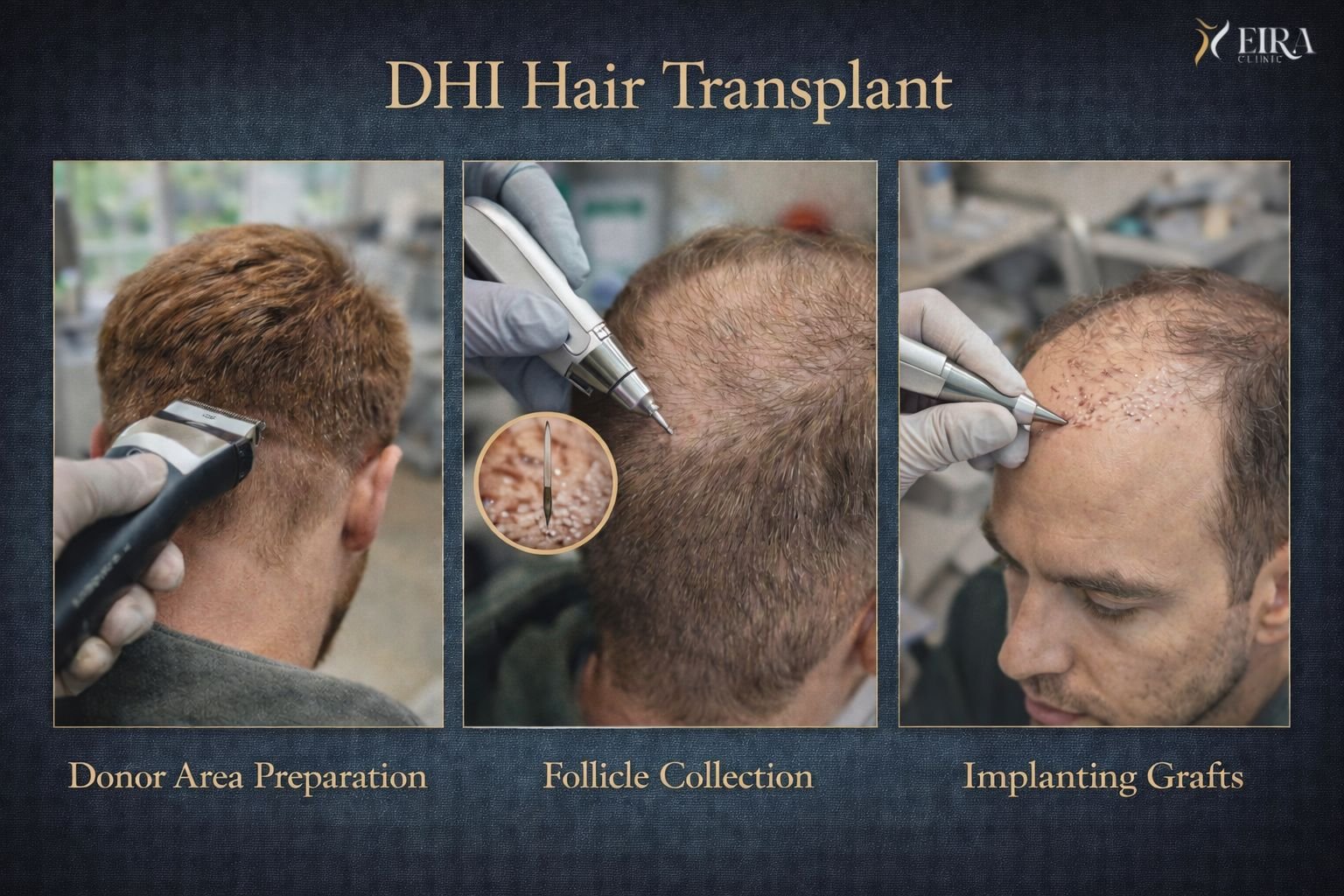
Precision, Density, and When It’s the Better Choice
DHI (Direct Hair Implantation) is an advanced hair transplant technique designed for patients who want maximum control, high density, and refined hairline results.
DHI is not “better than FUE” by default —
it is more precise, and therefore better for specific cases.
⸻
What Is DHI Hair Transplant?
DHI is a refined variation of FUE.
Hair follicles are:
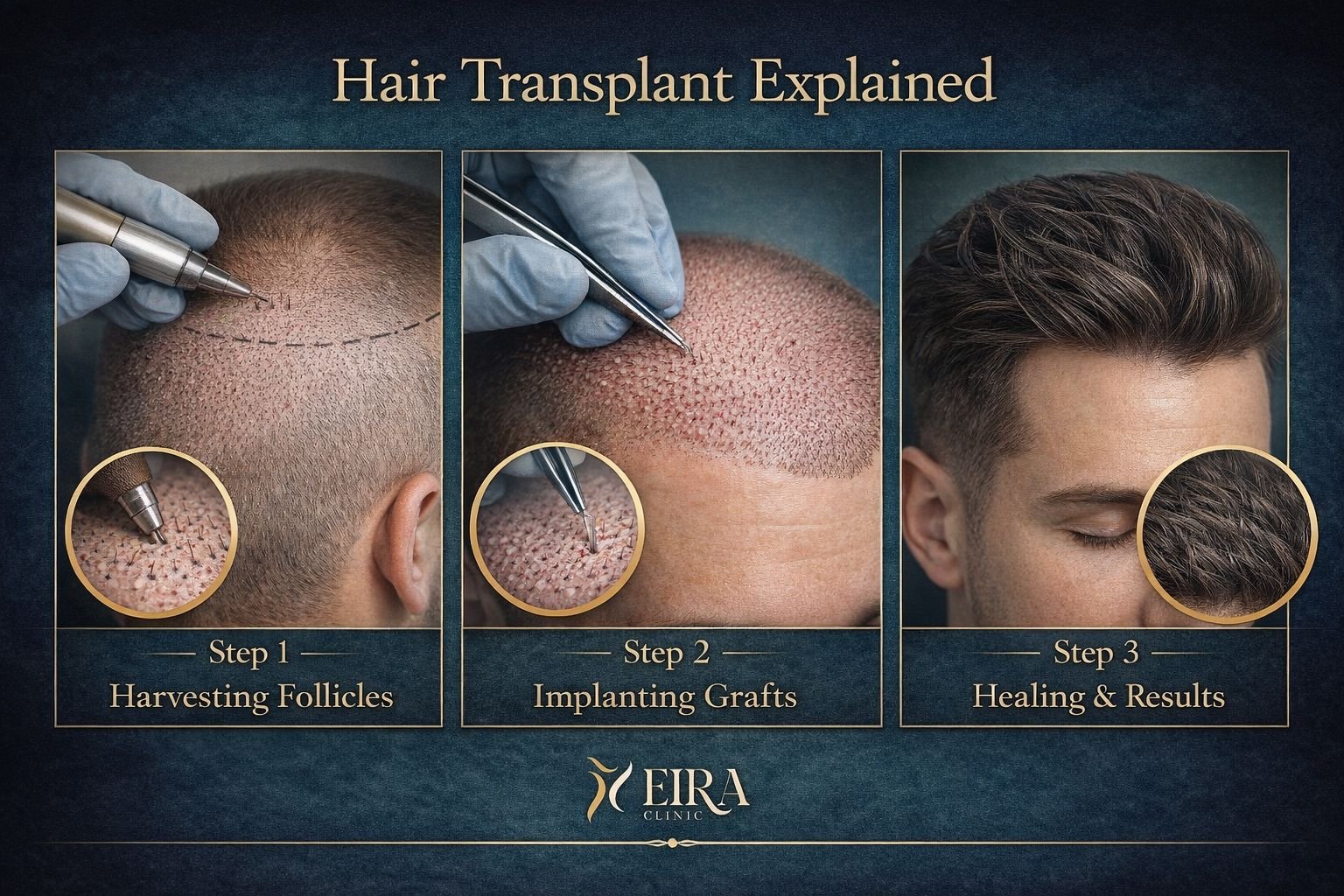
- Extracted individually (same as FUE)
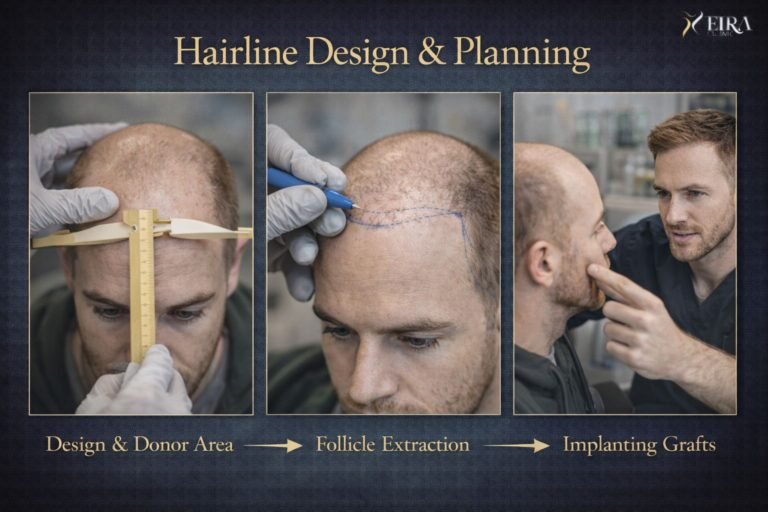
- Implanted directly using a specialized implantation pen
- Placed without pre-made channels
This allows the surgeon to control depth, angle, and direction during implantation in real time.
⸻
How DHI Differs from FUE
The difference is not extraction —
it’s the implantation method.
FUE
- Channels are created first
- Grafts are placed afterward
- Excellent for large areas
DHI
- Channels and implantation happen simultaneously
- Greater precision
- Better control in sensitive zones
Both are excellent — when used correctly.
⸻
Why DHI Offers Higher Precision
DHI allows:
- More controlled graft placement
- Closer spacing between follicles
- Improved density in targeted areas
- Better angle control for hairline and temples
This makes DHI ideal for detail-focused work.
⸻
When DHI Is the Better Choice
DHI is especially suitable for patients who:
- Want maximum density
- Need refined hairline reconstruction
- Have mild to moderate hair loss
- Want minimal trauma to the scalp
- Are treating frontal or crown areas
It’s often chosen for aesthetic-critical zones.
⸻
Does DHI Shave the Hair?
DHI can be performed:
- With shaving
- Or partially without shaving (in selected cases)
This is useful for:
- Female patients
- Patients wanting discreet procedures
Suitability depends on donor area and treatment scope.
⸻
Healing and Recovery with DHI
Because DHI is less invasive to surrounding tissue:
- Healing is often faster
- Redness may resolve sooner
- Scabbing can be lighter
Growth timeline remains similar:
- Shedding phase is normal
- Visible growth starts around 3–4 months
- Final results at 9–12 months
⸻
Density vs Overcrowding: A Critical Balance
Higher density does not mean:
- Random placement
- Overcrowding follicles
- Ignoring blood supply
Proper DHI respects:
- Scalp circulation
- Natural hair spacing
- Long-term graft survival
Precision without planning leads to failure.
⸻
DHI Is Not for Every Case
DHI may not be ideal if:
- Very large areas need coverage
- Donor area is limited
- Speed is prioritized over detail
In such cases, FUE or combined techniques may offer better outcomes.
⸻
Frequently Asked Questions (FAQ)
Is DHI more painful than FUE?
No. Comfort levels are similar.
Is DHI more expensive?
Often yes, due to precision and time involved.
Does DHI guarantee better results?
Only when correctly indicated and expertly performed.
⸻
Final Thoughts
DHI is a precision-focused technique —
not a marketing upgrade.
When chosen for the right patient, it delivers:
- Natural hairlines
- High-density results
- Excellent aesthetic control
The best technique is always the one chosen for medical reasons, not trends.