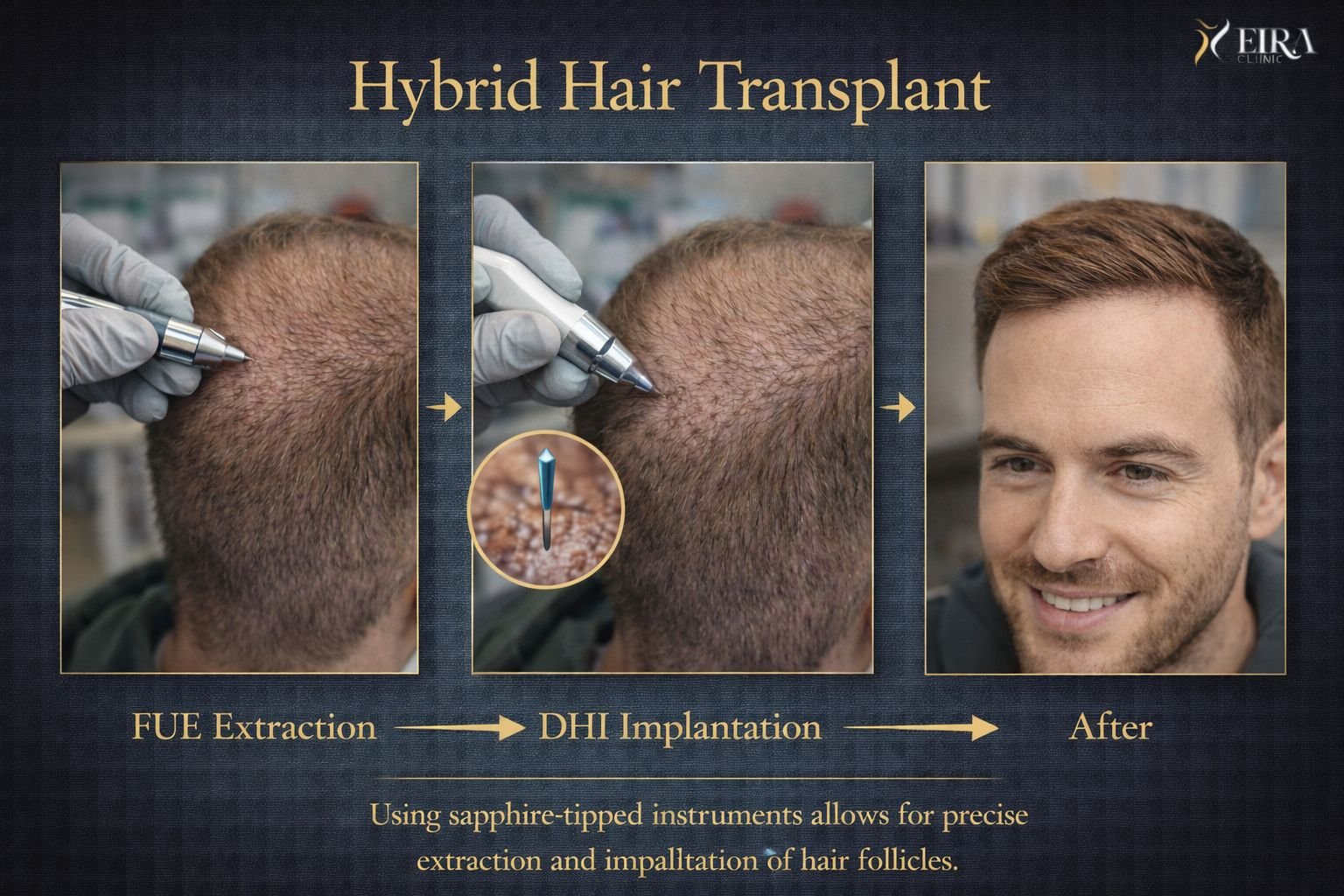
Combining Techniques for Optimal, Natural Results
No single hair transplant technique is perfect for every patient.
Some cases require density, others need precision, and some demand maximum coverage with refined aesthetics.
This is where Hybrid Hair Transplant comes in —
a customized approach that combines multiple techniques to achieve the best possible result for a specific case.
⸻
What Is a Hybrid Hair Transplant?
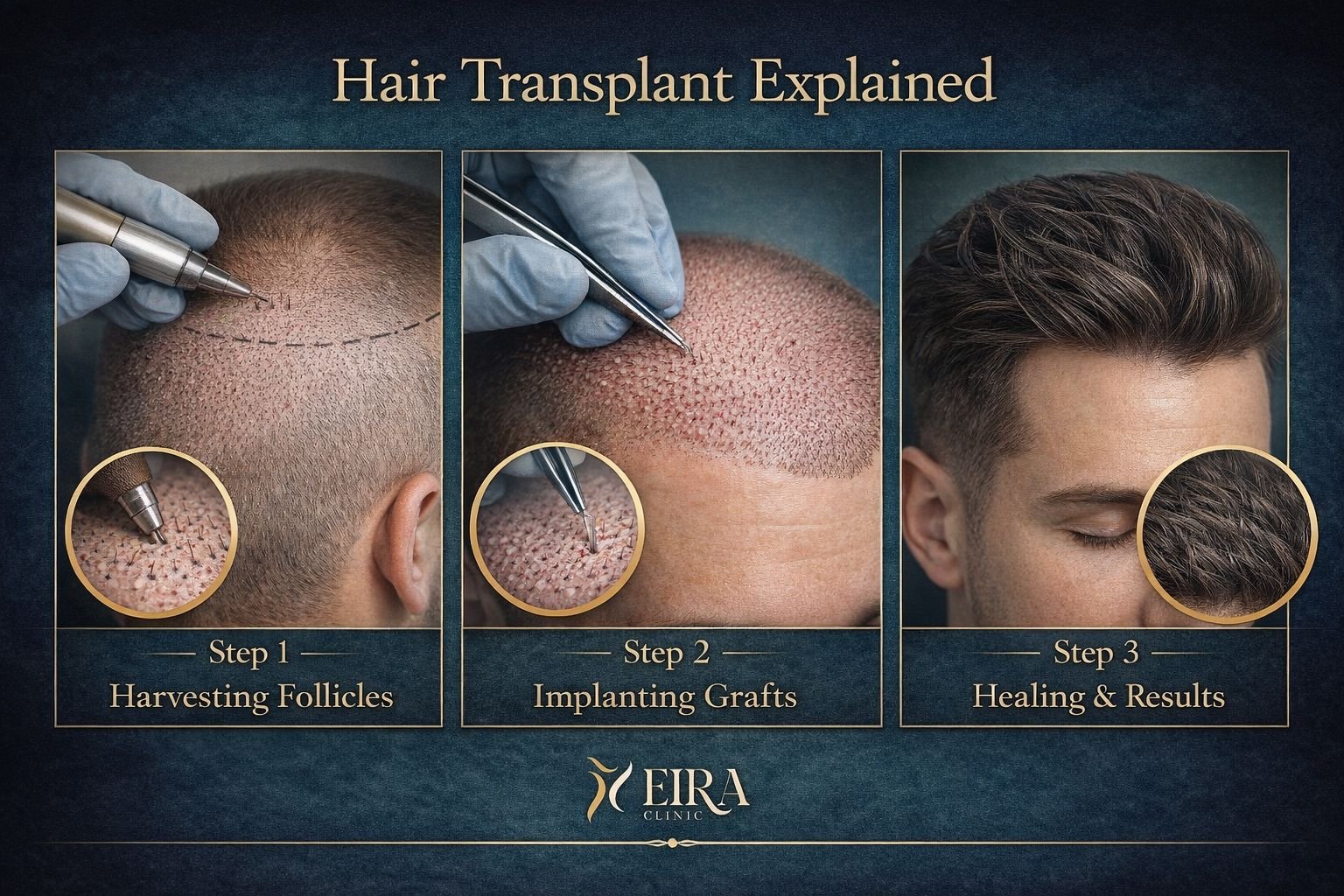
A Hybrid Hair Transplant is not a separate technique by itself.
It is a strategic combination of two or more methods, such as:
- FUE
- DHI
- Sapphire FUE
Each technique is used where it performs best.
The goal is not speed or marketing —
it is precision, density, and long-term natural appearance.
⸻
Why Combine Techniques?
Different areas of the scalp have different needs:
- Frontal hairline → requires extreme precision and angle control
- Mid-scalp → requires balanced density
- Crown → requires strategic distribution and direction
Using one technique everywhere can compromise results.
Hybrid planning adapts the method to the anatomy.
⸻
Common Hybrid Combinations
1️⃣ FUE + DHI
- FUE for large-area coverage
- DHI for detailed hairline and frontal zones
This balances efficiency with precision.
⸻
2️⃣ Sapphire FUE + DHI
- Sapphire FUE for clean channels and fast healing
- DHI for dense, controlled implantation in aesthetic zones
Often used in premium cases.
⸻
3️⃣ FUE + Sapphire FUE
- Standard FUE in donor harvesting
- Sapphire blades for refined channel opening
Improves healing and graft placement quality.
⸻
Who Is a Good Candidate for Hybrid Hair Transplant?
Hybrid approaches are ideal for patients who:
- Have advanced or uneven hair loss
- Want maximum density with natural hairlines
- Require different techniques in different zones
- Seek long-term, customized results
- Understand that quality matters more than speed
This approach is especially valuable in complex cases.
⸻
Planning Is the Core of Hybrid Success
Hybrid treatment requires:
- Detailed hair loss analysis
- Donor area mapping
- Zone-based density planning
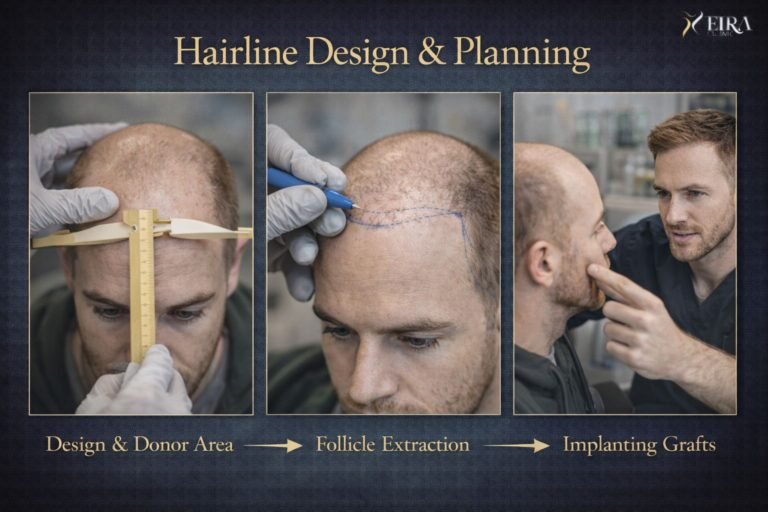
- Hairline and direction design
- Surgical team coordination
Without planning, hybrid becomes chaos.
⸻
Does Hybrid Hair Transplant Improve Results?
When done correctly:
- Yes — significantly
When done randomly:
- No — it increases risk
Hybrid success depends on strategy, not technique count.
⸻
Healing and Recovery
Recovery is similar to standard techniques:
- Mild redness and scabbing
- Temporary shedding phase
- Gradual regrowth over months
Hybrid methods do not change the growth timeline —
they improve how the final result looks.
⸻
Cost and Time Considerations
Hybrid transplants may:
- Take longer to perform
- Require higher surgical expertise
- Cost more than single-technique procedures
However, they often reduce the need for future corrections.
⸻
Frequently Asked Questions (FAQ)
Is hybrid better than FUE or DHI alone?
Only when medically indicated.
Does hybrid mean more grafts?
Not necessarily — it means better use of grafts.
Is hybrid suitable for everyone?
No. Simple cases may not need it.
⸻
Final Thoughts
Hybrid hair transplant represents the highest level of customization in hair restoration.
It’s not about offering every technique —
it’s about using the right technique in the right place.
That’s how truly natural, long-lasting results are created.