Does It Really Help? Science, Benefits, and Honest Expectations
PRP therapy is often promoted as a “magic booster” after hair transplant surgery.
But does it really improve results — or is it just marketing?
The truth lies between exaggeration and dismissal.
PRP is not mandatory, but when used correctly and for the right patient, it can be beneficial.
⸻
What Is PRP Therapy?
PRP (Platelet-Rich Plasma) is a treatment derived from the patient’s own blood.
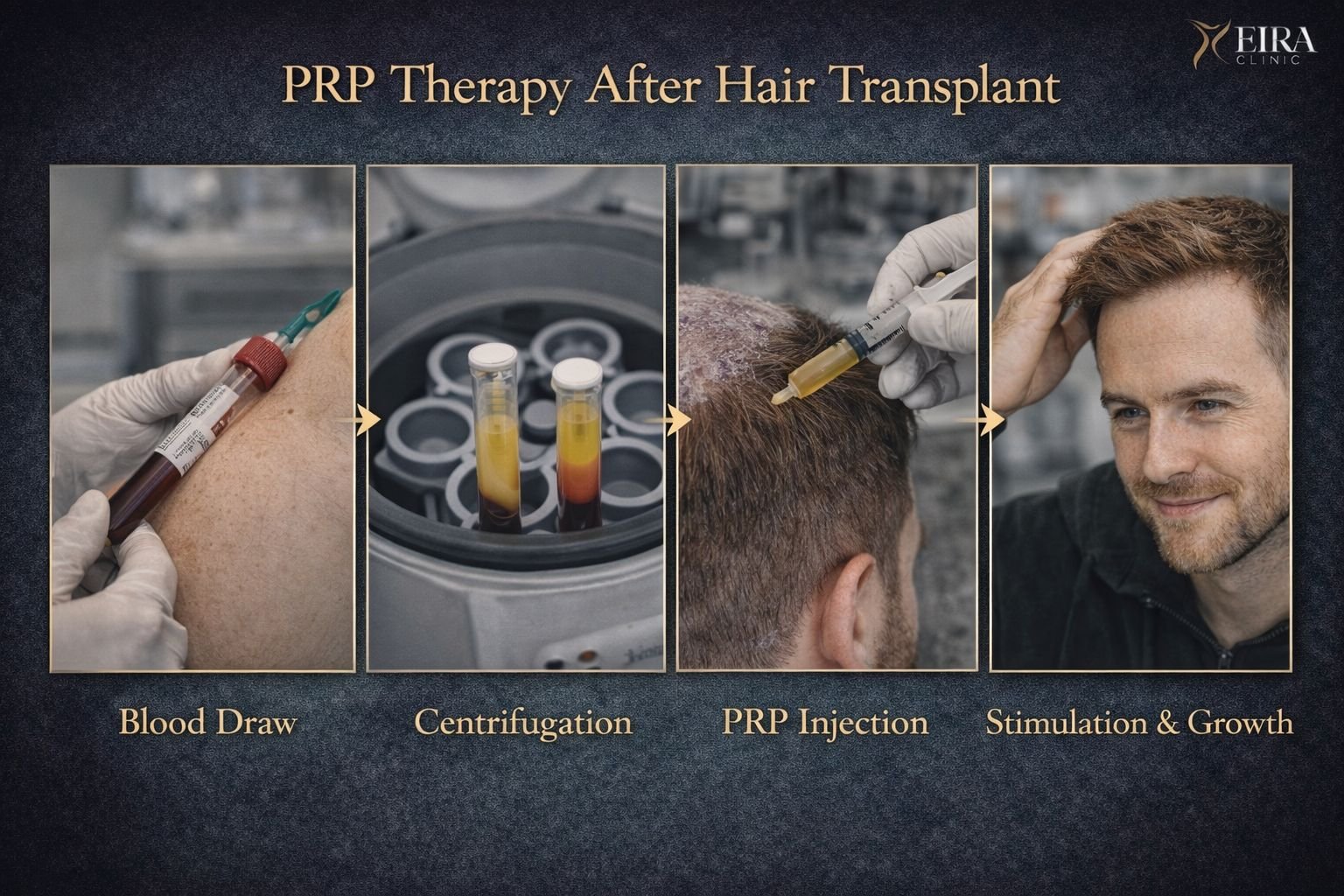
Process in brief:
- A small blood sample is taken
- Blood is centrifuged to concentrate platelets
- Platelet-rich plasma is injected into the scalp
Platelets contain growth factors that support healing and tissue regeneration.
⸻
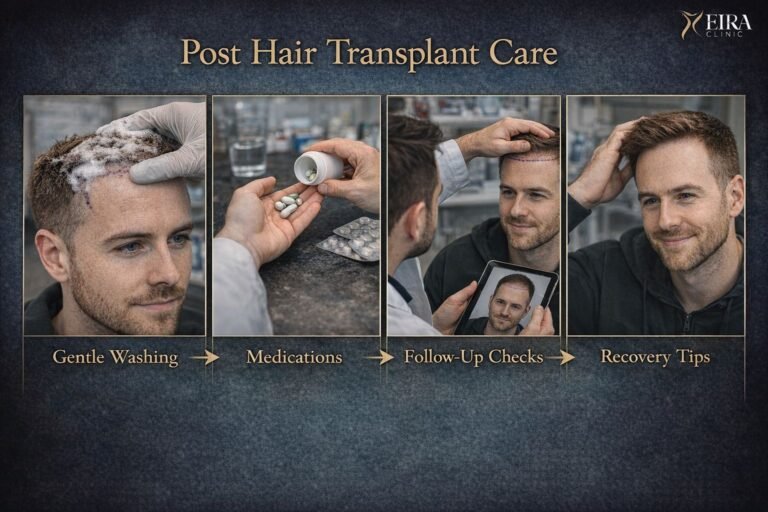
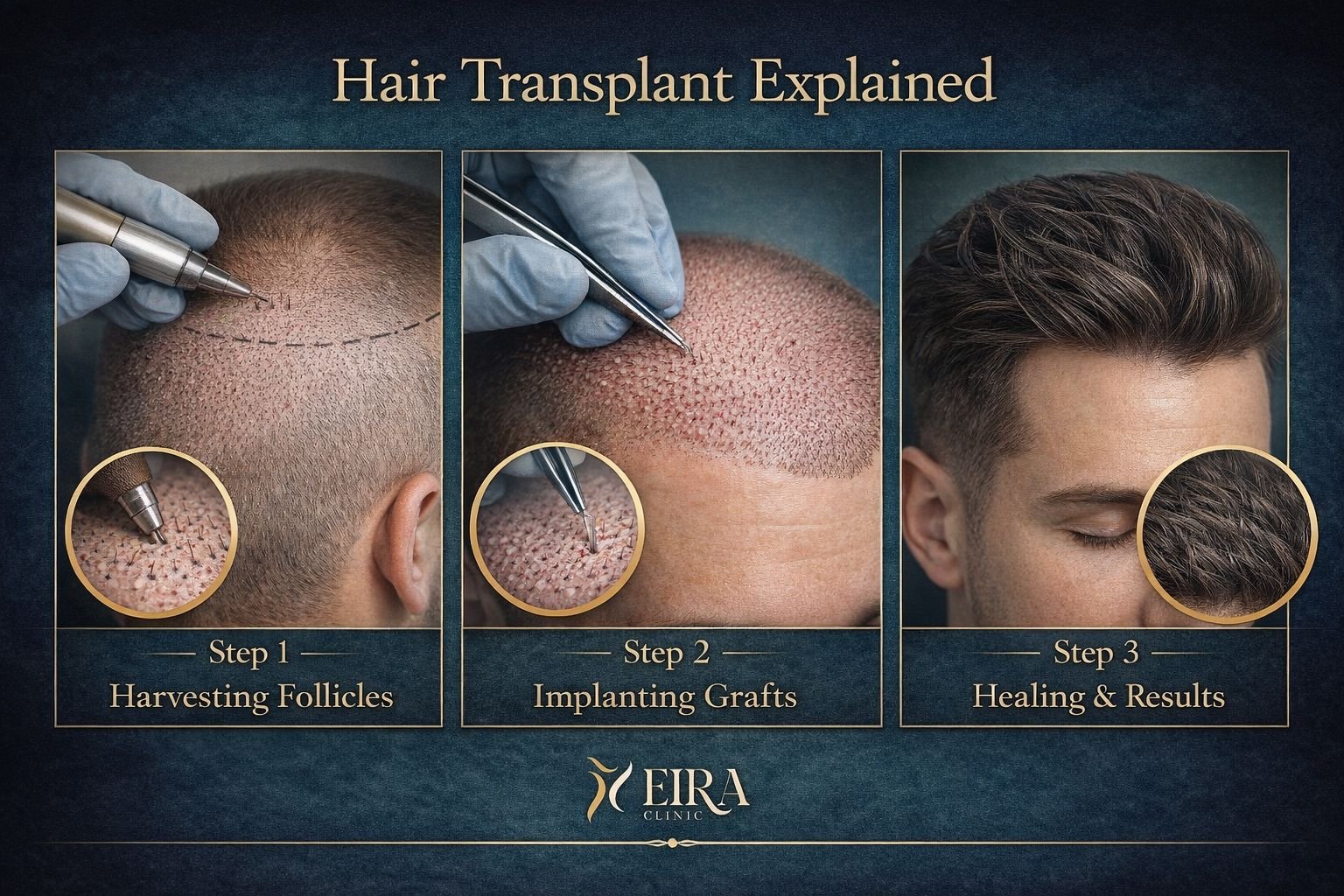
Why PRP Is Used After Hair Transplant
After a hair transplant:
- Grafts need strong blood supply
- Healing quality affects survival
- Inflammation must be controlled
PRP aims to:
- Improve healing environment
- Support graft survival
- Reduce inflammation
- Enhance early regrowth quality
It supports the process — it does not replace surgery.
⸻
What PRP Can and Cannot Do
✅ What PRP CAN Do
- Improve healing speed
- Support graft nutrition
- Reduce post-op inflammation
- Enhance hair thickness in some patients
⸻
❌ What PRP CANNOT Do
- Create new hair follicles
- Replace a hair transplant
- Fix poor surgical technique
- Guarantee faster final results
PRP is supportive, not transformative on its own.
⸻
When PRP Is Most Helpful
PRP may be especially beneficial for patients who:
- Have weak or thin hair
- Want to optimize healing
- Have slow recovery response
- Undergo large transplant sessions
- Combine PRP with surgery or early regrowth phase
Not every patient needs PRP — and that’s okay.
⸻
PRP Timing After Hair Transplant
PRP can be applied:
- During the transplant procedure
- In the early healing phase
- As follow-up sessions weeks later
The schedule depends on:
- Case complexity
- Scalp condition
- Healing response
There is no universal protocol.
⸻
PRP vs Medications (Minoxidil / Finasteride)
PRP is often confused with medications.
- PRP → healing & growth support
- Medications → hair loss control
They serve different purposes and can be combined when appropriate.
⸻
Is PRP Safe?
Yes.
Because PRP uses the patient’s own blood:
- No allergic reactions
- Minimal risk
- Well tolerated
Safety depends on proper preparation and sterile technique.
⸻
Scientific Reality: What Studies Show
Clinical studies suggest PRP:
- May improve hair thickness
- May enhance graft survival
- Shows variable results between individuals
This variability is why PRP should be personalized, not promised.
⸻
Should Everyone Do PRP After Hair Transplant?
No.
Ethical practice means:
- Recommending PRP when it adds value
- Avoiding unnecessary treatments
- Explaining realistic benefits
PRP is a tool, not a requirement.
⸻
Frequently Asked Questions (FAQ)
Is PRP painful?
Discomfort is minimal and short-lived.
How many PRP sessions are needed?
Varies by case — some need 1, others benefit from multiple.
Does PRP speed up hair growth?
It may support early growth quality, not drastically change timelines.
⸻
Final Thoughts
PRP therapy is not hype —
but it’s also not a miracle.
When used correctly, for the right patient, at the right time, PRP can:
- Support healing
- Improve hair quality
- Enhance overall outcomes
The key is honest indication, not routine upselling.