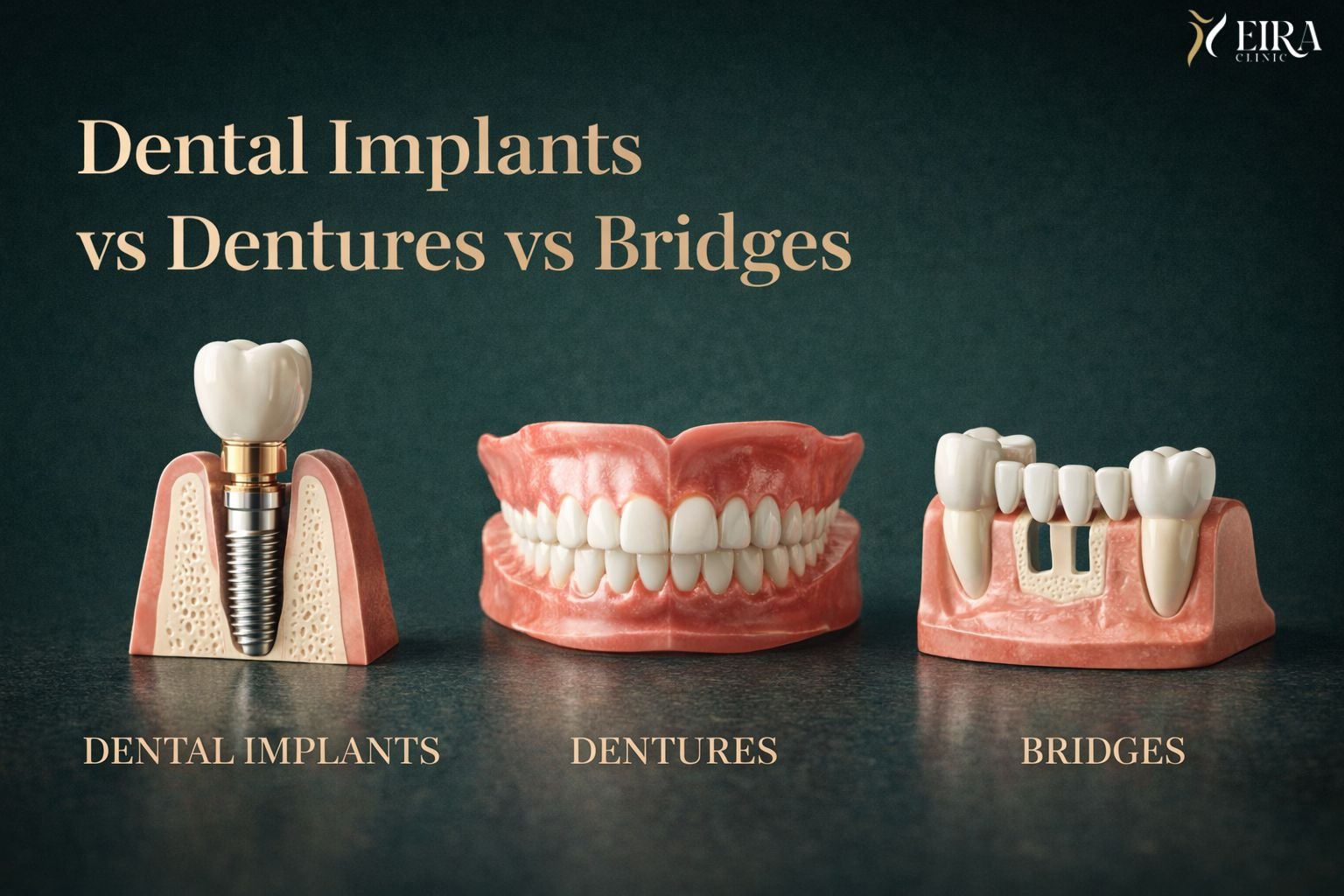
Dental implants vs dentures vs bridges is a comparison that starts with your own mouth and priorities. No option should be selected solely because it is marketed as the best.
A Long-Term Comparison for Smarter Tooth Replacement Decisions
When a tooth is lost, replacing it is not just about appearance.
The choice you make affects bone health, chewing efficiency, comfort, and long-term oral stability.
The three most common tooth-replacement options are:
• Dental Implants
• Dental Bridges
• Dentures
While all three restore appearance to some degree, they are not medically equal.
Understanding the differences helps you choose a solution that protects your health — not just your smile.
Understanding the Three Options
Dental Implants
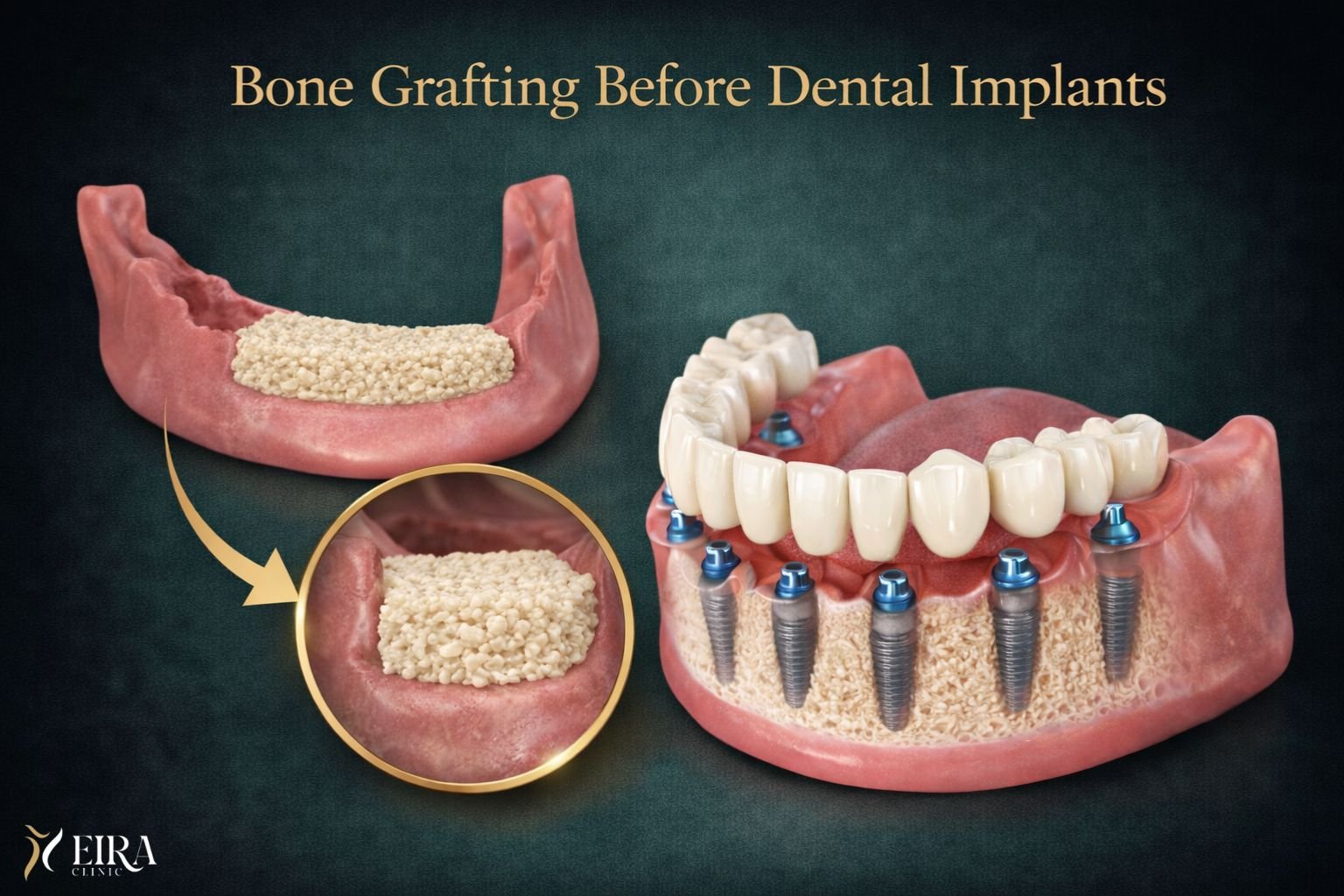
Dental implants replace the missing tooth from the root upward.
A titanium implant integrates with the jawbone and supports a crown, bridge, or full-arch restoration.
This approach restores:
• Bone stimulation
• Natural chewing forces
• Long-term stability
Implants are fixed, permanent, and independent of neighboring teeth.
Dental Bridges
A dental bridge replaces a missing tooth by anchoring a false tooth to the adjacent natural teeth, which are prepared and crowned.
Bridges:
• Restore appearance quickly
• Do not replace the tooth root
• Depend on neighboring teeth for support
While bridges can be effective short-term, they alter healthy teeth and do not prevent bone loss.
Dentures
Dentures are removable appliances that replace multiple or all missing teeth.
Dentures:
• Rest on the gums
• Are not fixed to the bone
• Often require periodic adjustments
They are usually chosen when other options are not immediately possible.
| Aspect | Dental Implants | Dental Bridges | Dentures |
|---|---|---|---|
| Bone preservation | ✅ Yes | ❌ No | ❌ No |
| Stability | ✅ Fixed | ✅ Fixed | ❌ Removable |
| Impact on nearby teeth | ❌ None | ⚠️ Requires alteration | ❌ None |
| Chewing efficiency | ✅ Near-natural | ⚠️ Moderate | ❌ Reduced |
| Long-term durability | ✅ Very high | ⚠️ Limited | ❌ Lower |
| Comfort | ✅ Excellent | ✅ Good | ⚠️ Variable |
Bone Health: The Most Important Difference
When a tooth is lost, the jawbone begins to shrink due to lack of stimulation.
• Dental implants restore stimulation and help preserve bone.
• Bridges and dentures sit above the bone and allow continued bone loss.
Over time, bone loss can affect:
• Facial structure
• Bite stability
• The success of future treatments
Comfort and Daily Life
With Dental Implants
• No movement or slipping
• No speech interference
• No dietary restrictions
• Feels like natural teeth
With Bridges
• Stable, but relies on crowned teeth
• Can be sensitive if supporting teeth weaken
With Dentures
• May move while eating or speaking
• Can cause sore spots
• Often require adhesives
Comfort plays a major role in long-term satisfaction.
Longevity and Maintenance
Dental Implants
• Designed to last decades
• Require regular hygiene and check-ups
Dental Bridges
• Typically last 7–15 years
• May need replacement if supporting teeth fail
Dentures
• Require relining or replacement
• Bone changes often affect fit over time
From a long-term perspective, implants often require fewer replacements.
Cost: Short-Term vs Long-Term Thinking
At first glance:
• Dentures and bridges appear more affordable
• Implants have a higher initial cost
However, when considering:
• Replacement costs
• Bone loss management
• Ongoing adjustments
Dental implants often become the most cost-effective solution over time.
Who Should Choose Which Option?
Dental Bridges may be suitable if you:
• Have healthy adjacent teeth
• Need a faster, non-surgical option
Dentures may be considered if you:
• Have extensive tooth loss
• Are not immediately eligible for implants
A professional evaluation is essential before deciding.
The Importance of Professional Diagnosis
Choosing the wrong solution can lead to:
• Accelerated bone loss
• Bite problems
• Repeated treatments
At an advanced level, tooth replacement is a medical decision, not a cosmetic one.
3D imaging, bite analysis, and long-term planning are critical to selecting the right option.
Questions for your dentist
Take questions from this article to an individual consultation. Ask how the assessment affects your plan, which alternatives are available and what to do if problems arise. This article cannot determine which treatment you should choose.
Related treatment in Istanbul
Read about dental implants in Istanbul at Eira Clinic. Contact us with an enquiry.
This article provides general information and does not replace a dental examination or advice from your own dentist.
Independent background information: patient information from a professional or public health source.