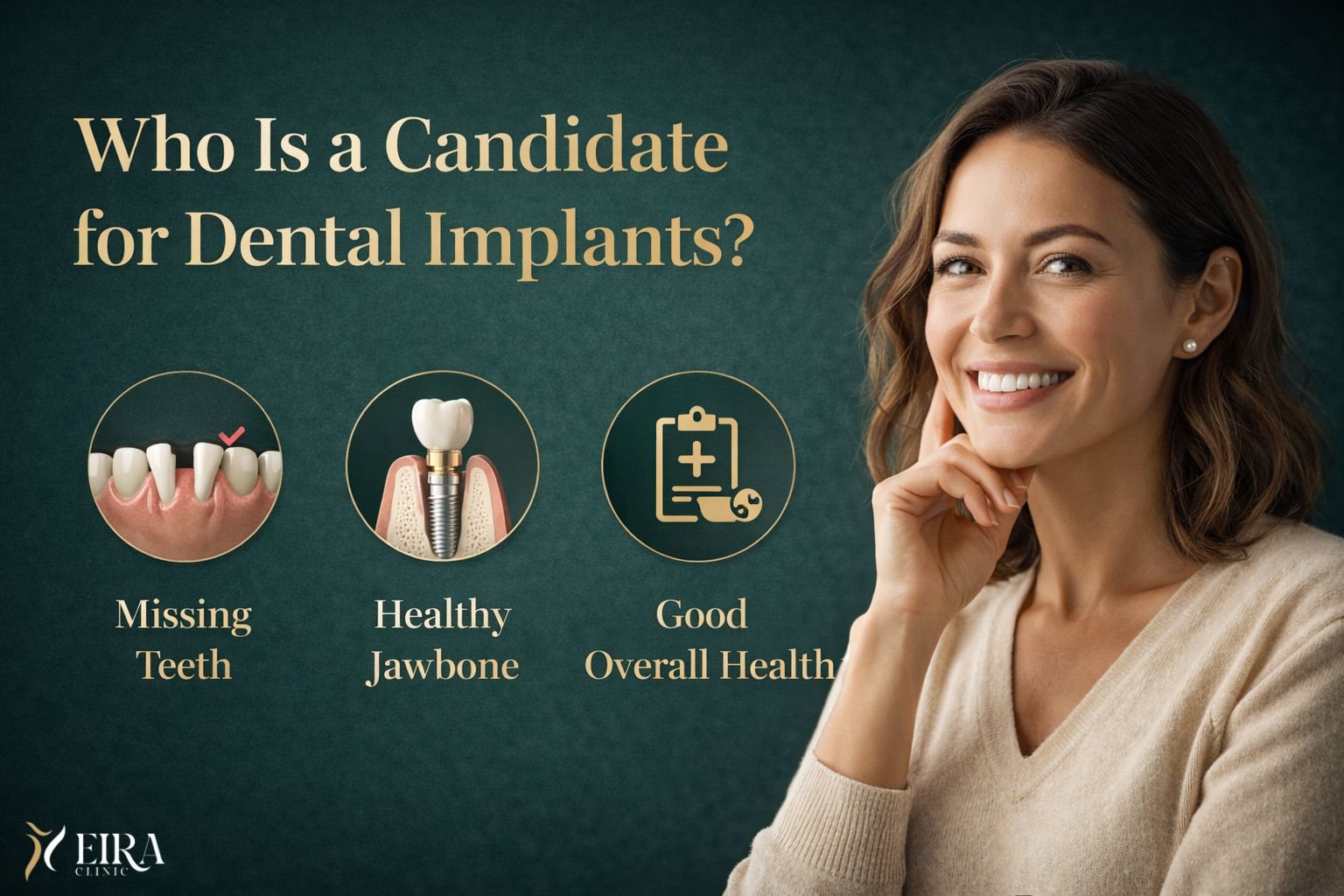
Medical Criteria Explained Clearly and Honestly
Dental implants are one of the most predictable and successful treatments in modern dentistry —
but they are not automatically suitable for everyone.
Being a candidate for dental implants depends on medical, anatomical, and behavioral factors, not age alone.
Understanding these criteria helps patients make informed, safe, and realistic decisions.
This article explains who is a good candidate for dental implants — and why proper evaluation matters.
⸻
What Determines Implant Candidacy?
Dental implant candidacy is determined through a medical and dental assessment, not a simple visual exam.
The main factors include:
• Jawbone quality and volume
• Gum health
• General medical condition
• Lifestyle habits
• Long-term oral hygiene commitment
A professional evaluation is essential before any recommendation is made.
⸻
1️⃣ Jawbone Quality and Volume
Dental implants must integrate with the jawbone to succeed.
Key considerations:
• Bone height and width
• Bone density
• Bone stability
If sufficient bone is present, implants can often be placed safely.
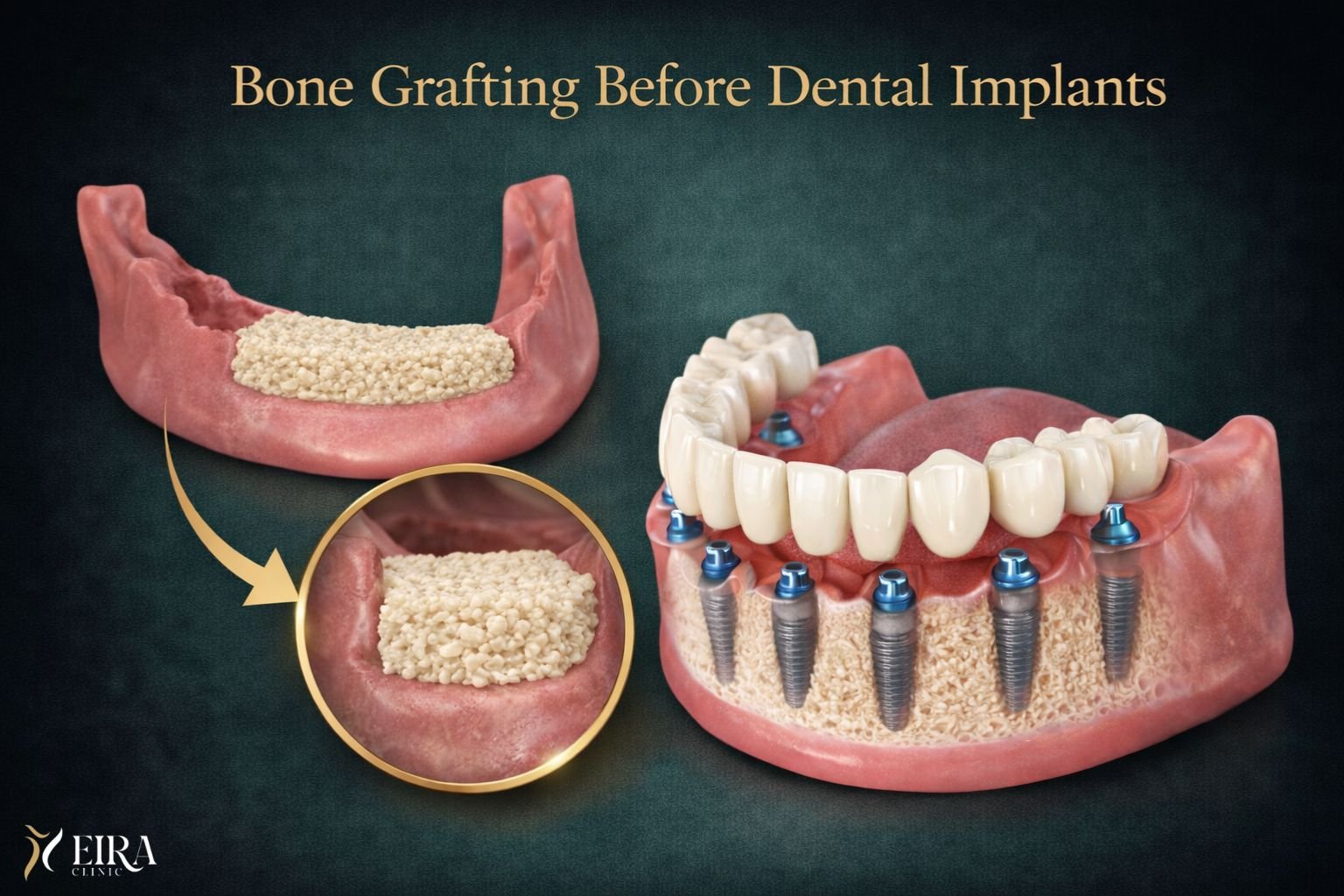
If bone loss exists, bone grafting or advanced techniques may still make implants possible.
⚠️ Bone loss does not automatically disqualify a patient — but it requires experience and planning.
⸻
2️⃣ Gum Health and Periodontal Condition
Healthy gums are critical for implant success.
Patients with:
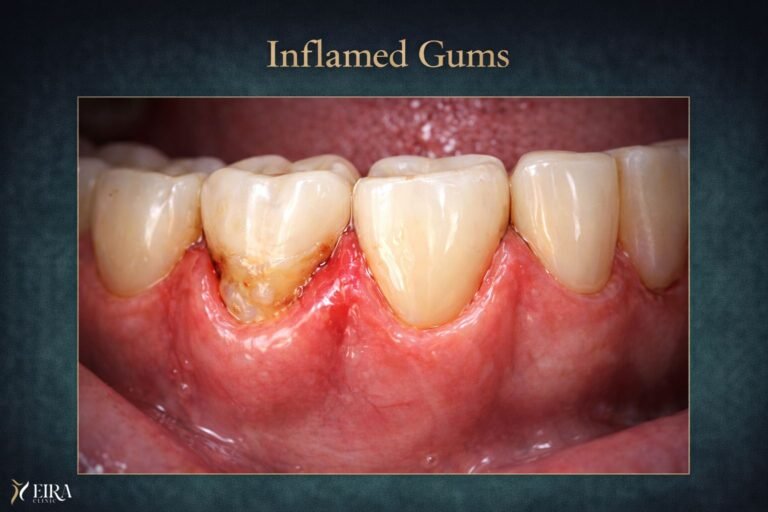
• Active gum disease
• Chronic inflammation
• Untreated infections
must receive periodontal treatment before implant placement.
Placing implants in unhealthy gums significantly increases the risk of complications.
⸻
3️⃣ General Medical Health
Most healthy adults can receive dental implants.
However, certain conditions require careful evaluation, such as:
• Uncontrolled diabetes
• Immune system disorders
• Certain blood conditions
• Recent cancer treatments
These conditions do not always prevent implant treatment, but they require coordination and planning.
⸻
4️⃣ Smoking and Lifestyle Habits
Smoking negatively affects:
• Healing
• Blood supply to the gums
• Bone integration
Smokers are not automatically excluded, but they have:
• Higher risk of complications
• Lower long-term success rates
Reducing or quitting smoking significantly improves implant outcomes.
⸻
5️⃣ Age: Is There an Age Limit for Implants?
There is no upper age limit for dental implants.
Implants are successfully placed in patients in their 60s, 70s, and beyond —
as long as bone health and general medical condition are suitable.
The only age restriction applies to young patients whose jawbones are still developing.
⸻
6️⃣ Oral Hygiene and Commitment to Care
Dental implants require the same — or higher — level of care as natural teeth.
Candidates must be willing to:
• Maintain excellent oral hygiene
• Attend regular check-ups
• Follow professional care instructions
Implants fail more often due to neglect, not because of the implant itself.
⸻
The Role of Advanced Diagnostics
Determining candidacy cannot be done accurately without modern diagnostics.
Proper evaluation includes:
• 3D CBCT imaging
• Clinical examination
• Bite and force analysis
• Medical history review
These tools allow dentists to plan implants safely, precisely, and predictably.
⸻
Who May Need Additional Procedures Before Implants?
Some patients may require preparatory treatments such as:
• Bone grafting
• Sinus lift surgery
• Gum treatment
These procedures are not complications —
they are solutions that expand eligibility for implant treatment.
⸻
Can Someone Be “Not a Candidate”?
In rare cases, implants may be postponed or avoided due to:
• Severe uncontrolled medical conditions
• Inability to maintain hygiene
• Lack of bone combined with refusal of grafting
In such cases, alternative solutions are discussed ethically and transparently.
⸻
Frequently Asked Questions (FAQ)
Can I get implants if I have bone loss?
Yes, in many cases. Bone grafting or advanced implant techniques may be used.
Can implants be placed immediately after tooth extraction?
In certain cases, yes — if bone and infection control allow it.
Do medical conditions automatically prevent implants?
No. Many conditions can be managed with proper planning.
⸻
Final Thoughts
Dental implants are not about “yes or no” —
they are about when, how, and with what preparation.
The right candidate is determined through:
• Medical evaluation
• Advanced imaging
• Honest consultation
This approach ensures safety, longevity, and predictable success.