All-on-6 explained: learn what to ask about a proposed six-implant plan and why the number of implants alone does not determine the right treatment.
While All-on-4 is an excellent solution for many patients, some cases require greater stability, better force distribution, and enhanced long-term durability.
This is where All-on-6 becomes the preferred option.
All-on-6 is not about placing more implants for marketing reasons —
it is about biomechanics, load management, and long-term success.
What Is All-on-6?
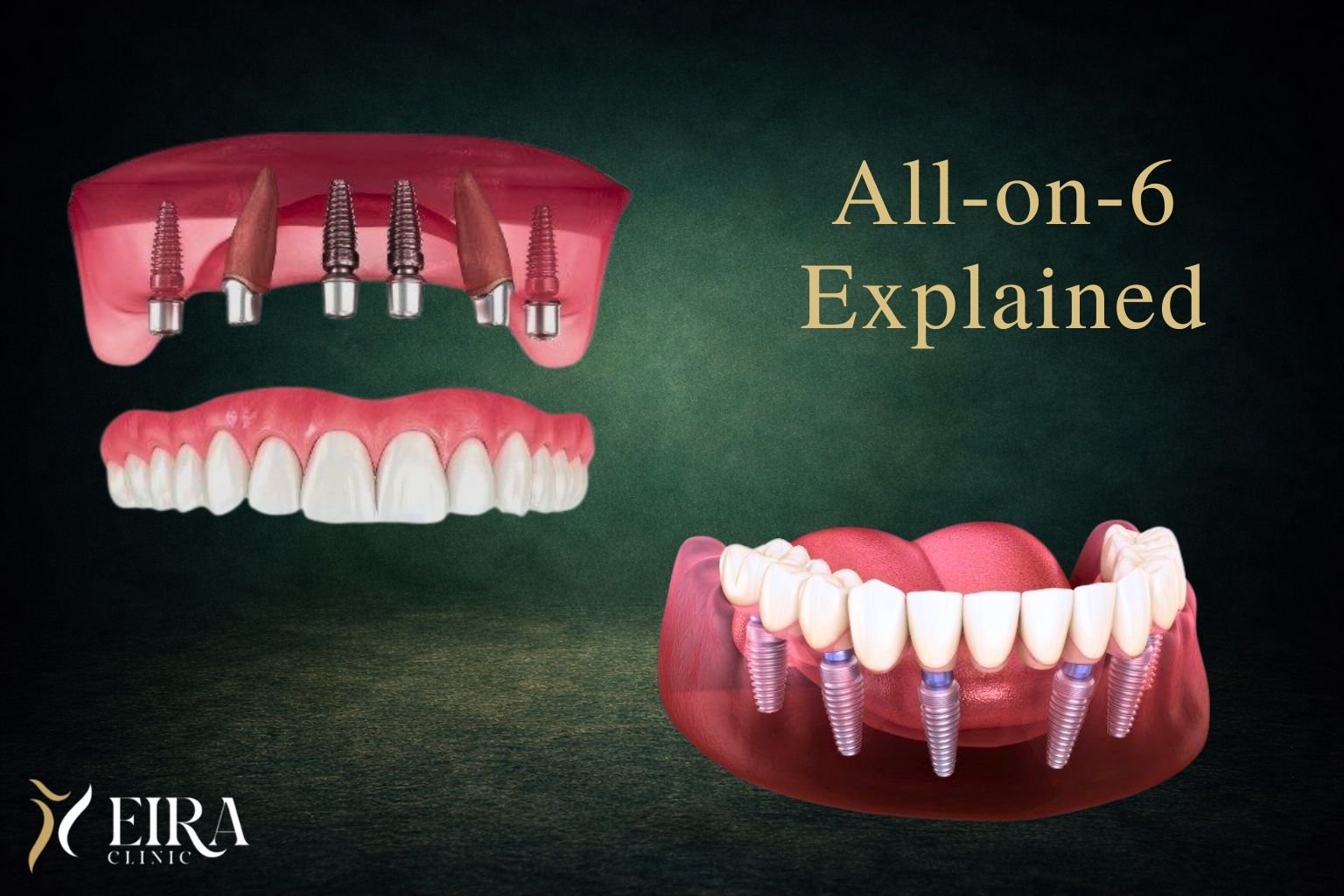
All-on-6 is a full-arch dental implant technique that uses six implants to support a fixed set of teeth in either the upper or lower jaw.
Implants are typically placed as:
- Two implants in the front
- Four implants distributed toward the back
This configuration provides a wider and more balanced foundation for the prosthetic teeth.
Why Some Patients Need All-on-6
Not every jaw behaves the same way.
All-on-6 is often recommended when:
- Bite forces are strong
- Bone volume allows optimal implant placement
- Long-term load distribution is a priority
- Maximum stability is desired
- The patient prefers a premium, long-term solution
In these cases, additional implants reduce stress on each implant.
Biomechanical Advantage of All-on-6
The main advantage of All-on-6 lies in force distribution.
With six implants:
- Chewing forces are spread more evenly
- Each implant carries less load
- Prosthetic flexing is reduced
- Long-term mechanical stability is improved
This can be especially important in the lower jaw or in patients with strong chewing muscles.
All-on-6 vs All-on-4: The Real Difference
The difference is not “better vs worse” —
it is appropriate vs inappropriate for a specific case.
- All-on-4 prioritizes strategic angulation and efficiency
- All-on-6 prioritizes load distribution and redundancy
Both can succeed — or fail — depending on diagnosis and planning.
Immediate Teeth with All-on-6
All-on-6 may also allow for immediate loading in suitable cases.
However, just like All-on-4:
- Immediate teeth are temporary
- Final prosthetics are placed after healing
- Healing protocols must be respected
Stability during the healing phase is essential.
Benefits of All-on-6
Patients often choose All-on-6 for:
- Enhanced stability
- Increased confidence during chewing
- Better long-term durability
- Reduced mechanical stress
- Peace of mind for the future
It is often considered a premium full-arch solution.
Are There Any Limitations?
All-on-6 requires:
- Adequate bone volume
- More surgical planning
- Slightly higher cost compared to All-on-4
However, when medically indicated, these factors are justified by improved long-term outcomes.
The Role of Digital Planning in All-on-6
Precise implant placement is critical.
Advanced planning includes:
- 3D CBCT imaging
- Digital bite analysis
- Prosthetic-driven implant positioning
- Evaluation of long-term forces
Without planning, even six implants can fail.
Long-Term Outlook and Maintenance
With proper care and follow-up, All-on-6 can:
- Provide excellent long-term function
- Maintain prosthetic stability
- Support facial structure
- Improve quality of life
Maintenance remains essential for success.
Questions for your dentist
Take questions from this article to an individual consultation. Ask how the assessment affects your plan, which alternatives are available and what to do if problems arise. This article cannot determine which treatment you should choose.
Related treatment in Istanbul
Read about All-on-6 dental implants at Eira Clinic. Contact us with an enquiry.
This article provides general information and does not replace a dental examination or advice from your own dentist.
Independent background information: patient information from a professional or public health source.