Bone grafting before dental implants should be explained as part of the whole treatment plan. Clarify the material, proposed stages, healing reviews and alternatives before booking.
Hearing the words “bone grafting” can sound intimidating.
Many patients assume it means complications, risk, or delay.
In reality, bone grafting is one of the most predictable and routine procedures in modern implant dentistry — and often the key that makes dental implants possible.
This article explains when bone grafting is needed, how it works, and why it protects long-term implant success.
Why Bone Grafting May Be Necessary
Dental implants require sufficient, healthy bone to remain stable.
Bone grafting may be needed when:
- Teeth have been missing for a long time
- Bone loss occurred due to gum disease
- Trauma or infection damaged the bone
- Dentures accelerated bone resorption
- Natural anatomy limits implant placement
Without adequate bone support, implant stability is compromised.
What Is Bone Grafting?
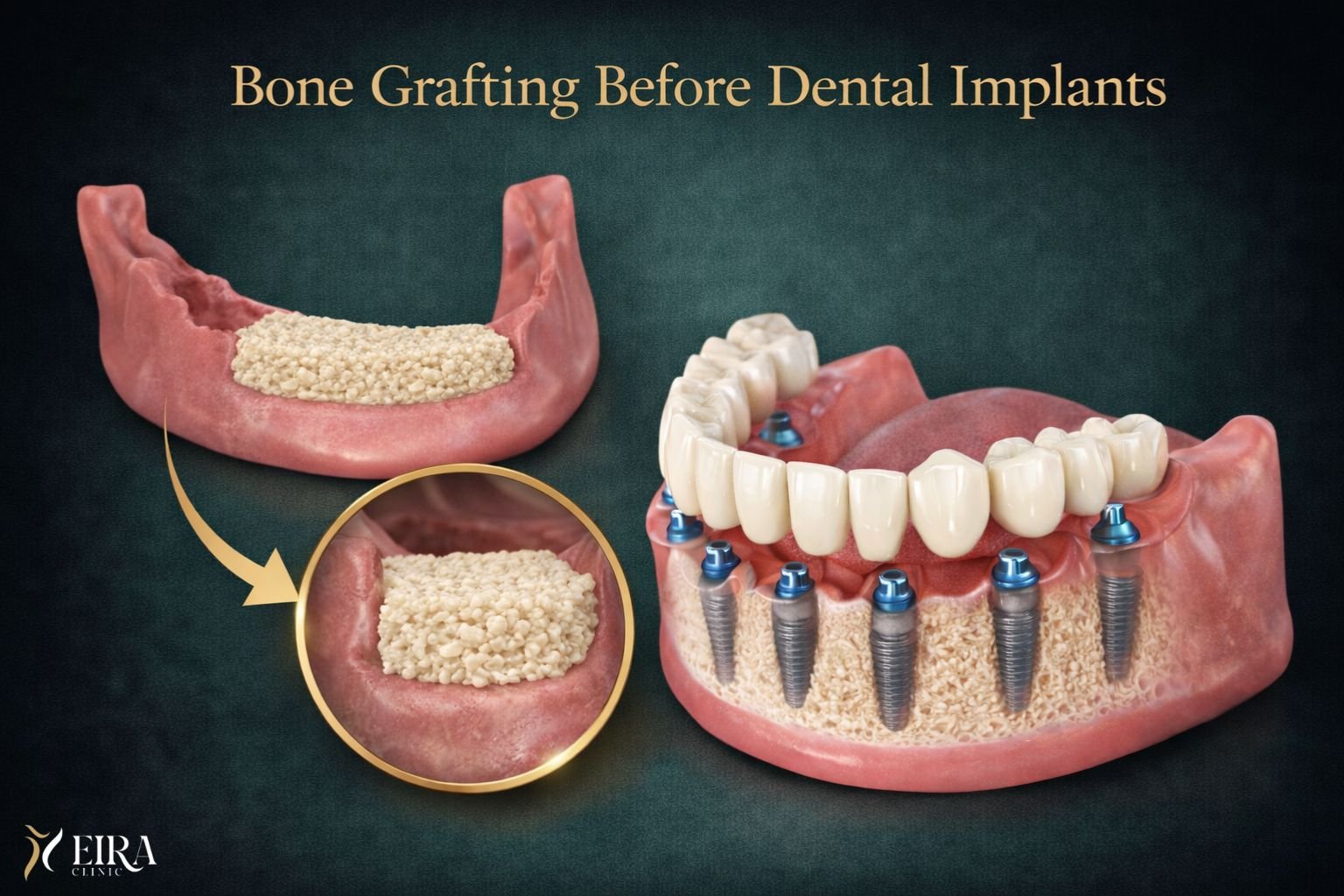
Bone grafting is a procedure that adds bone material to areas where bone volume or quality is insufficient.
The goal is to:
- Rebuild lost bone
- Create a stable foundation for implants
- Allow implants to be placed in the correct position
Over time, the grafted material integrates with the natural bone.
Types of Bone Grafting Materials
Modern dentistry uses safe and well-studied materials, including:
- Synthetic bone substitutes
- Natural bone-derived materials
- Biocompatible mineral compounds
The choice depends on:
- Defect size
- Location
- Healing capacity
- Treatment timeline
Your dentist selects the material best suited for predictable healing.
How Bone Grafting Works Biologically
Bone grafts act as a scaffold.
They:
- Support new bone formation
- Encourage natural bone growth
- Gradually integrate into the jaw
Over time, the graft becomes part of the patient’s own bone structure.
Is Bone Grafting Painful?
Most patients are surprised by how manageable bone grafting is.
Typical experience includes:
- Mild post-procedure discomfort
- Temporary swelling
- Controlled healing
Discomfort is usually less than expected and well managed with standard care.
Does Bone Grafting Delay Treatment?
Bone grafting can:
- Be performed simultaneously with implant placement in some cases
- Or require a healing period before implant placement in others
While this may extend the timeline, it significantly improves long-term success.
Rushing implant placement without proper bone support increases failure risk.
Why Bone Grafting Improves Implant Longevity
Proper bone support:
- Improves implant stability
- Reduces overload stress
- Protects surrounding bone
- Enhances long-term success rates
Bone grafting is an investment in durability, not a complication.
When Bone Grafting Is NOT Optional
In some cases, skipping bone grafting can lead to:
- Implant failure
- Progressive bone loss
- Poor prosthetic positioning
- Compromised aesthetics
Ethical dentistry prioritizes foundation over speed.
Questions for your dentist
Take questions from this article to an individual consultation. Ask how the assessment affects your plan, which alternatives are available and what to do if problems arise. This article cannot determine which treatment you should choose.
Related treatment in Istanbul
Read about Bone grafting for dental implants at Eira Clinic. Contact us with an enquiry.
This article provides general information and does not replace a dental examination or advice from your own dentist.
Independent background information: patient information from a professional or public health source.