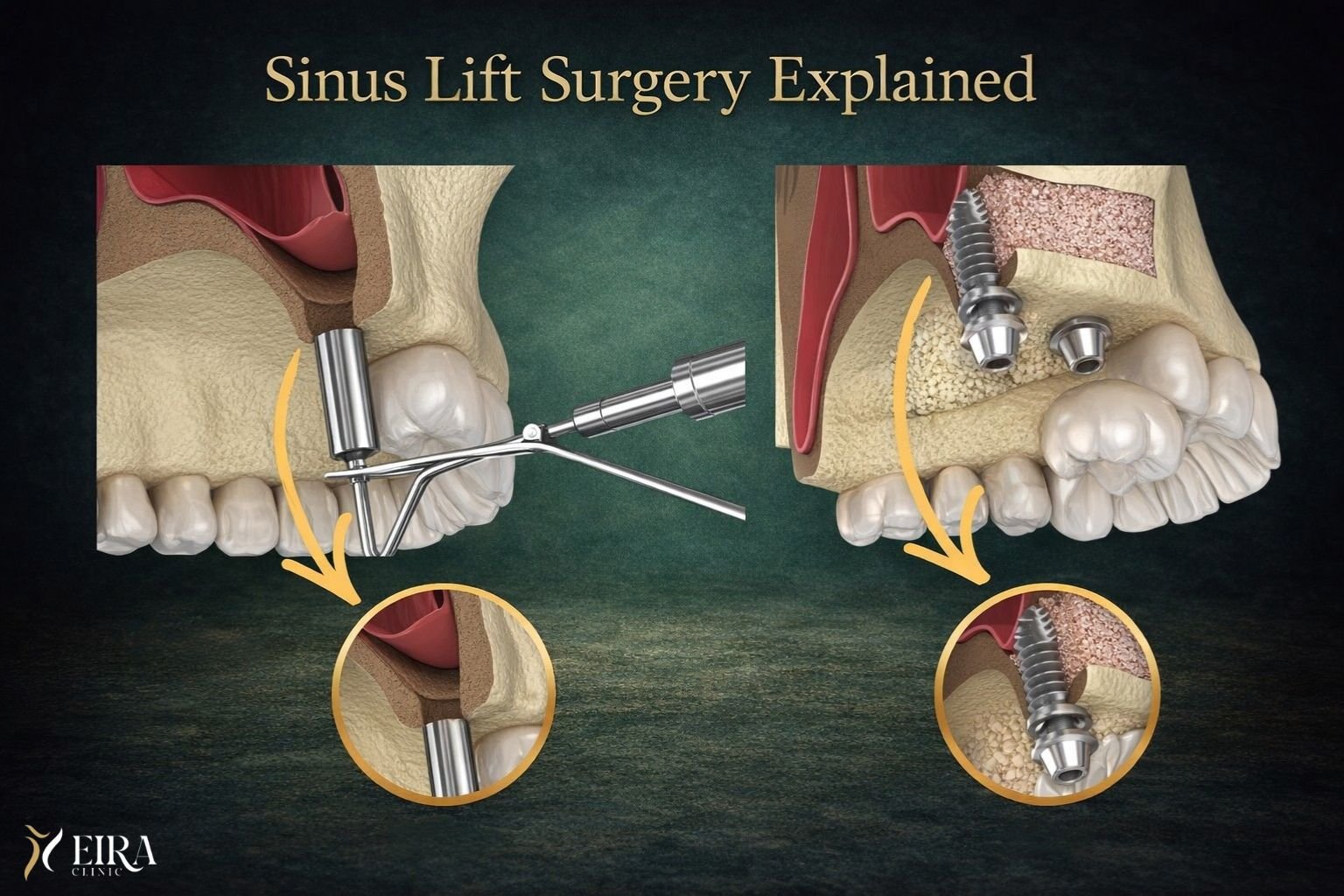
Sinus lift surgery is a topic to discuss when planning upper-jaw implants. Ask why it is proposed for your case and how the visits and follow-up would be organised.
For many patients, the upper back jaw presents a unique challenge for dental implants —
not because of weak bone, but because of the maxillary sinus.
Hearing the term “sinus lift” can sound complex or alarming.
In reality, sinus lift surgery is a well-established, predictable procedure that safely makes implant placement possible.
This article explains what a sinus lift is, why it’s needed, and what patients should expect — without unnecessary fear.
Why the Sinus Can Limit Implant Placement
The maxillary sinus is an air-filled cavity located above the upper back teeth.
After tooth loss:
- The jawbone begins to shrink
- The sinus gradually expands downward
- Available bone height decreases
This can leave insufficient bone to safely place dental implants in the upper jaw.
What Is a Sinus Lift?
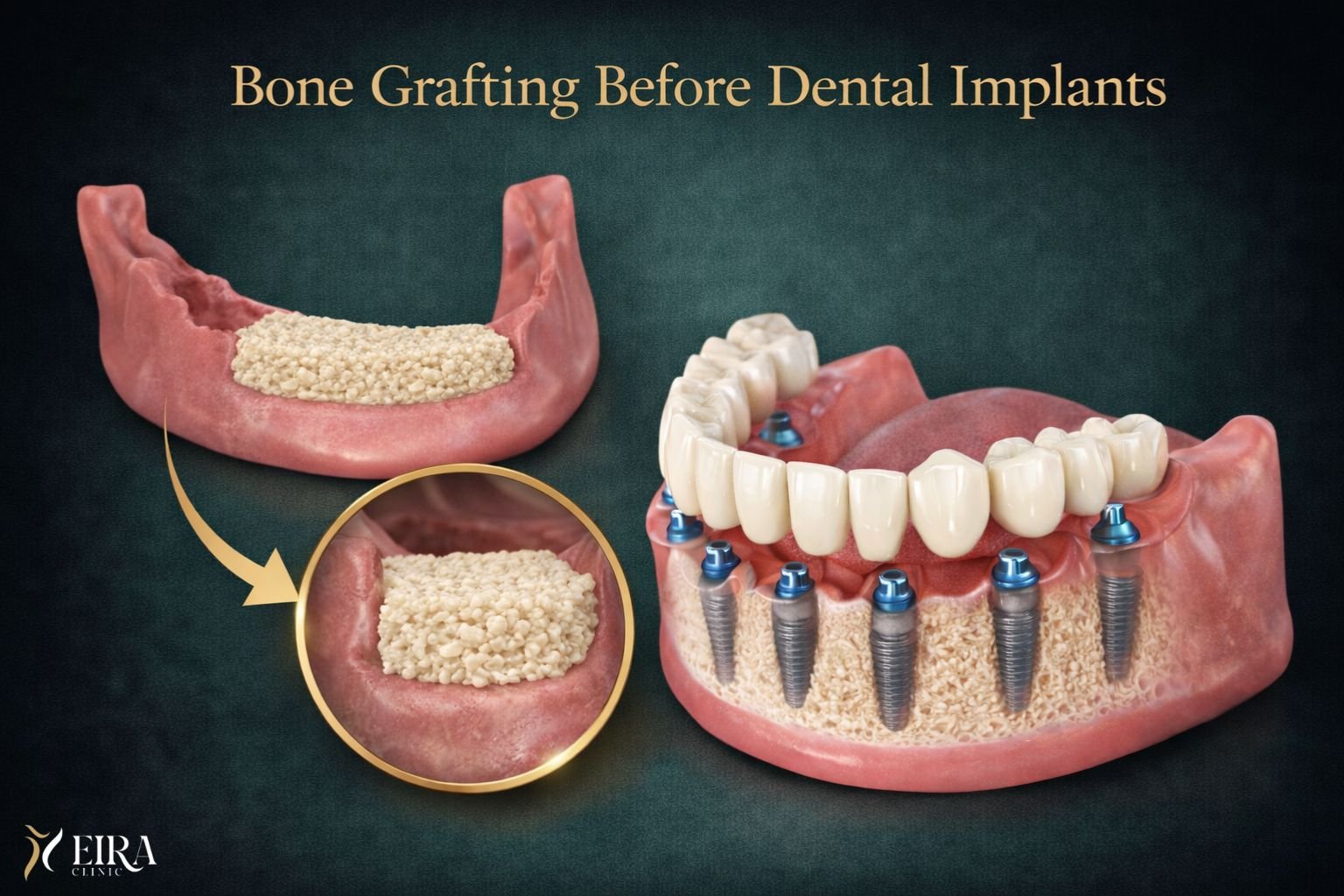
A sinus lift is a surgical procedure that:
- Gently lifts the sinus membrane upward
- Creates space beneath it
- Adds bone material to increase bone height
Types of Sinus Lift Procedures
The type of sinus lift depends on how much bone is available.
1 Closed (Internal) Sinus Lift
- Less invasive
- Performed through the implant site
- Suitable when a small bone increase is needed
Often done at the same time as implant placement.
2 Open (Lateral) Sinus Lift
- Used when more bone is required
- Accessed from the side of the jaw
- Allows greater bone augmentation
Implants may be placed later or simultaneously, depending on stability.
Is Sinus Lift Surgery Safe?
Yes.
When performed by experienced professionals, sinus lift surgery has high success rates.
Safety depends on:
- Accurate diagnosis
- Gentle surgical technique
- Proper case selection
- Respecting healing timelines
Sinus lift procedures are routine in advanced implant centers worldwide.
Does a Sinus Lift Affect Breathing?
No.
A properly performed sinus lift does not affect breathing, sinus function, or airflow.
The sinus membrane is lifted gently and remains intact.
Is Sinus Lift Surgery Painful?
Most patients report:
- Minimal discomfort
- Mild swelling
- Temporary pressure sensation
Pain is usually well controlled and comparable to other minor oral surgeries.
Healing and Implant Placement Timeline
Healing depends on:
- Type of sinus lift
- Amount of bone added
- Individual healing capacity
Implants may be placed:
- At the same time as the sinus lift
- Or after a healing period
Rushing implant placement increases risk — healing is part of success.
Why Sinus Lifts Improve Implant Success
Without adequate bone height:
- Implants lack stability
- Failure risk increases
A sinus lift:
- Creates proper bone support
- Allows ideal implant positioning
- Protects long-term outcomes
It transforms “impossible” cases into successful implant treatments.
Common Myths About Sinus Lift Surgery
“Sinus lifts are dangerous.”
False. They are predictable when properly planned.
“It affects sinus health.”
False. Sinus function remains normal.
“It’s a rare procedure.”
False. It’s routinely performed in implant dentistry.
Questions for your dentist
Take questions from this article to an individual consultation. Ask how the assessment affects your plan, which alternatives are available and what to do if problems arise. This article cannot determine which treatment you should choose.
Related treatment in Istanbul
Read about Sinus lift at Eira Clinic. Contact us with an enquiry.
This article provides general information and does not replace a dental examination or advice from your own dentist.
Independent background information: patient information from a professional or public health source.