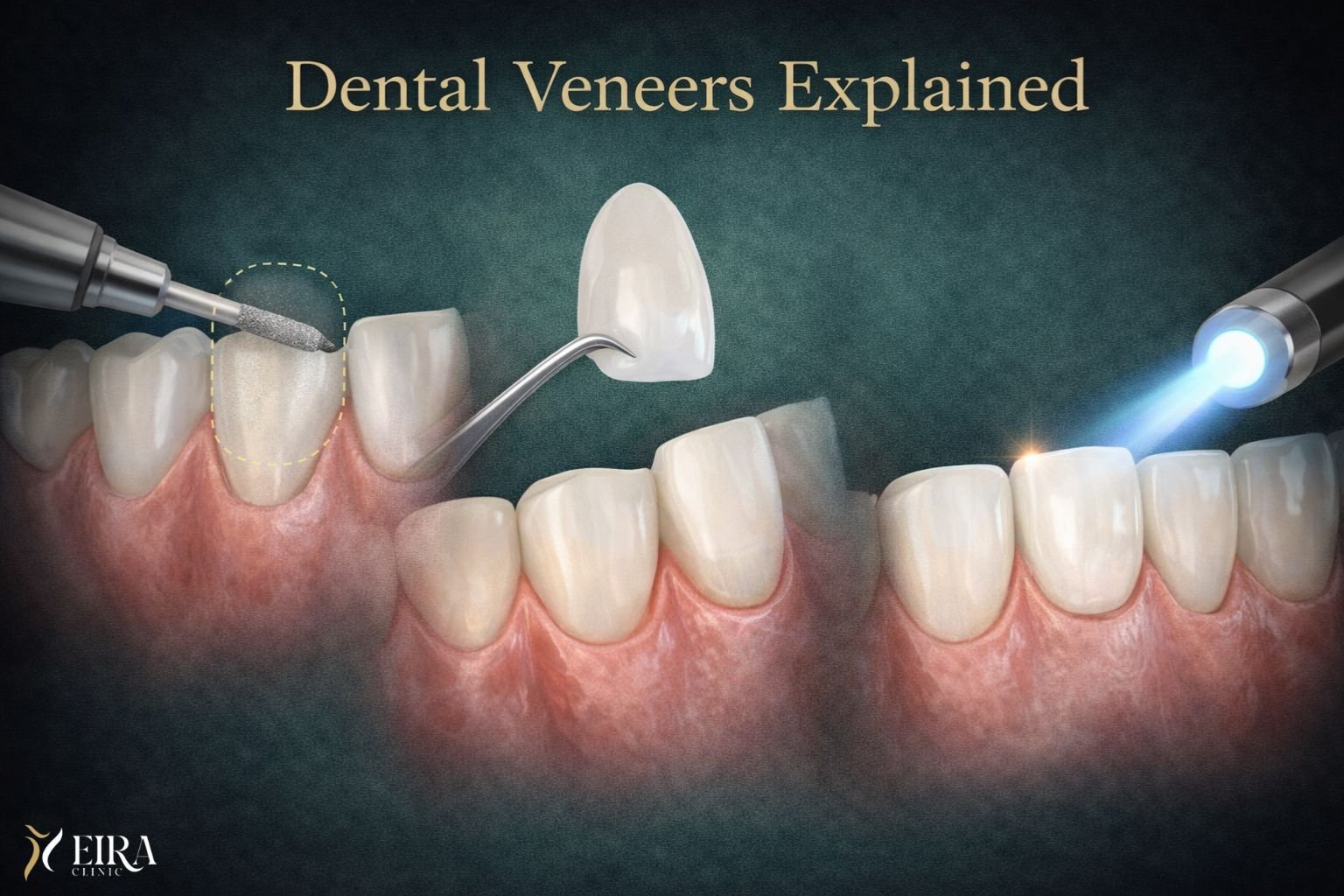
Dental veneers explained: before deciding, ask how your natural teeth would be affected, which alternatives exist and how future maintenance would work.
Dental veneers are one of the most powerful tools in aesthetic dentistry —
when used for the right reasons.
They can transform a smile beautifully, but they are not a universal solution.
Understanding when veneers are appropriate — and when other treatments are better — is essential for long-term satisfaction.
What Are Dental Veneers?
Dental veneers are thin, custom-made shells bonded to the front surface of teeth to improve:
- Shape
- Colour
- Proportion
- Alignment (in selected cases)
They are typically made from porcelain or advanced ceramic materials, designed to mimic the natural translucency of enamel.
What Veneers Can Correct
Veneers are ideal for addressing aesthetic concerns, such as:
- Discolored teeth that don’t respond to whitening
- Chipped or worn edges
- Uneven tooth sizes
- Small gaps between teeth
- Mild misalignment
- Asymmetrical smile lines
When indications are correct, veneers deliver natural-looking, long-lasting results.
When Veneers Are the Right Choice
Veneers are best suited for patients who:
- Have healthy teeth and gums
- Want aesthetic improvement rather than functional correction
- Seek conservative smile enhancement
- Understand that veneers are a cosmetic solution
Proper case selection is what separates natural results from artificial-looking smiles.
When Veneers Are NOT the Best Option
Veneers may not be ideal if:
- Teeth have extensive decay or large fillings
- There is active gum disease
- Bite problems are severe
- Teeth grinding is untreated
- Structural damage requires full coverage
In these cases, crowns, orthodontics, or other restorative options may be more appropriate.
Minimal-Preparation vs No-Prep Veneers
Minimal-Preparation Veneers
- Require slight enamel shaping
- Provide better fit and durability
- Most commonly recommended
No-Prep Veneers
- Suitable only for very specific cases
- Risk of over-contouring if misused
- Not ideal for most patients
Conservative preparation protects tooth health and improves long-term outcomes.
Veneers vs Crowns: Knowing the Difference
Veneers
- Cover the front surface
- Preserve more natural tooth structure
- Used mainly for aesthetics
Crowns
- Cover the entire tooth
- Used for structural reinforcement
- Chosen when teeth are weakened
Choosing veneers when crowns are needed — or vice versa — leads to poor outcomes.
The Role of Digital Smile Design in Veneers
Veneers should never be placed without a clear design plan.
Digital Smile Design allows:
- Facial and smile analysis
- Preview of final results
- Proportion control
- Patient approval before treatment
Design-first planning prevents over-preparation and aesthetic dissatisfaction.
Longevity and Care of Veneers
With proper care, veneers can last many years.
Key factors include:
- Excellent oral hygiene
- Regular professional check-ups
- Avoiding biting hard objects
- Night guards if grinding is present
Longevity depends more on planning and habits than on materials alone.
Common Veneer Myths
“Veneers ruin your natural teeth.”
False. Conservative veneers preserve tooth structure when planned correctly.
“Veneers look fake.”
Poor design looks fake. Proper planning looks natural.
“Veneers are only for celebrities.”
Veneers are a medical aesthetic solution — not a trend.
Questions for your dentist
Take questions from this article to an individual consultation. Ask how the assessment affects your plan, which alternatives are available and what to do if problems arise. This article cannot determine which treatment you should choose.
Related treatment in Istanbul
Read about Dental veneers at Eira Clinic. Contact us with an enquiry.
This article provides general information and does not replace a dental examination or advice from your own dentist.
Independent background information: patient information from a professional or public health source.