A Medical Decision — Not a Package Deal
In today’s dental market, full-arch implant treatments are often presented as fixed “packages.”
All-on-4. All-on-6. Same-day teeth. Fixed prices.
But in advanced implant dentistry, choosing between All-on-4 and All-on-6 is not a package choice —
it is a medical, biomechanical, and long-term decision.
This article explains why the right choice depends on the patient — not the offer.
⸻
Why the “Package Mentality” Is Dangerous
Treating All-on-4 or All-on-6 as interchangeable options can lead to:
• Overloading implants
• Mechanical complications
• Bone loss over time
• Prosthetic failure
• Patient dissatisfaction
Implant dentistry is not about how many implants are placed —
it is about how forces are managed over years.
⸻
The Core Difference: Biomechanics, Not Numbers
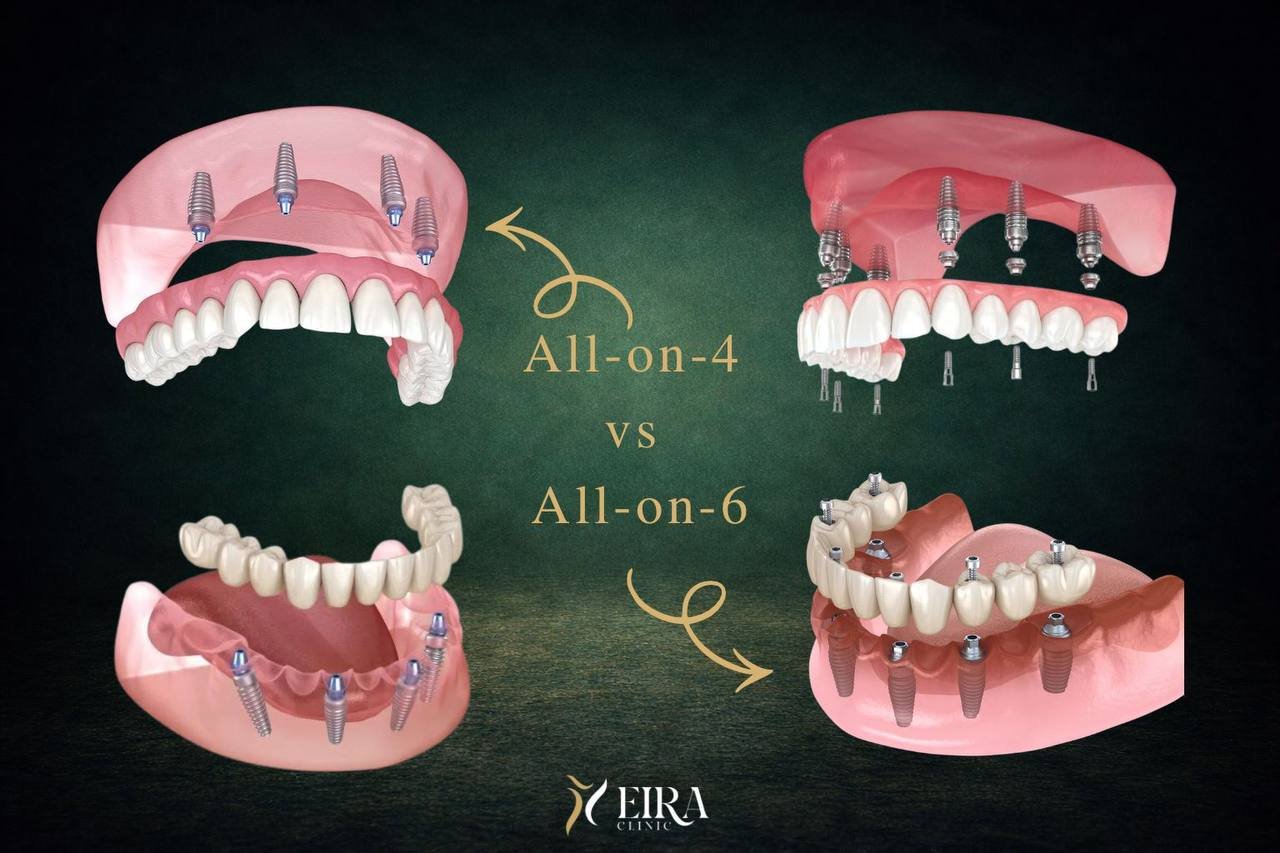
The true difference between All-on-4 and All-on-6 lies in force distribution.
All-on-4
• Relies on strategic angulation
• Concentrates load on fewer implants
• Efficient for suitable bone conditions
• Requires precise execution
All-on-6
• Distributes forces across more implants
• Reduces stress per implant
• Offers biomechanical redundancy
• Ideal when long-term stability is prioritized
Neither system is “better” by default.
Each is right only in the right scenario.
⸻
Key Medical Factors That Determine the Right Choice
1️⃣ Bone Density (Not Just Bone Volume)
Adequate bone volume does not guarantee adequate bone quality.
Lower-density bone may benefit from:
• More implants
• Wider load distribution
• Reduced stress per implant
⸻
2️⃣ Bite Force and Chewing Pattern
Patients with:
• Strong chewing muscles
• History of tooth grinding (bruxism)
• Heavy bite forces
often require greater implant support to avoid overload.
⸻
3️⃣ Jaw Anatomy and Prosthetic Design
Implant placement must support:
• Proper bite alignment
• Prosthetic thickness
• Long-term stability of materials
The prosthetic design determines how forces travel through the implants.
⸻
4️⃣ Long-Term Maintenance Strategy
Long-term success depends on:
• Cleanability
• Access for professional care
• Prosthetic retrievability
These factors influence implant number and positioning.
⸻
Why “More Implants” Is Not Always Better
Placing unnecessary implants can:
• Increase surgical complexity
• Raise costs without added benefit
• Complicate hygiene and maintenance
Ethical dentistry means placing the right number of implants — not the maximum number.
⸻
Digital Planning: The Deciding Factor
Advanced implant centers do not decide based on preference —
they decide based on data.
Proper planning includes:
• 3D CBCT imaging
• Digital bite analysis
• Prosthetic-driven implant positioning
• Simulation of long-term load forces
Without digital planning, even six implants can fail.
With proper planning, four implants can succeed predictably.
⸻
Real-World Outcomes: What Actually Matters
Long-term success is measured by:
• Implant survival
• Bone stability
• Prosthetic integrity
• Patient comfort
• Ease of maintenance
Patients care less about implant count —
and more about how well their teeth function years later.
⸻
How We Approach the Decision at an Advanced Level
At a world-class standard, the process is:
1️⃣ Medical and dental evaluation
2️⃣ 3D imaging and digital analysis
3️⃣ Bite force and prosthetic assessment
4️⃣ Risk evaluation over time
5️⃣ Personalized recommendation
The final decision is based on what protects the patient best long-term.
⸻
Frequently Asked Questions (FAQ)
Is All-on-6 always safer than All-on-4?
Not always. Safety depends on planning and case selection, not implant count.
Can All-on-4 be converted to All-on-6 later?
In some cases, yes — but ideal planning from the start is always preferable.
Why do some clinics offer only one option?
Because packages are easier to sell than personalized treatment.
⸻
Final Thoughts
Choosing between All-on-4 and All-on-6 should never be about:
• Discounts
• Packages
• Convenience
It should be about:
• Biology
• Biomechanics
• Longevity
When the decision is made correctly, both systems can deliver exceptional results.