When Extra Stability, Strength, and Longevity Matter
While All-on-4 is an excellent solution for many patients, some cases require greater stability, better force distribution, and enhanced long-term durability.
This is where All-on-6 becomes the preferred option.
All-on-6 is not about placing more implants for marketing reasons —
it is about biomechanics, load management, and long-term success.
⸻
What Is All-on-6?
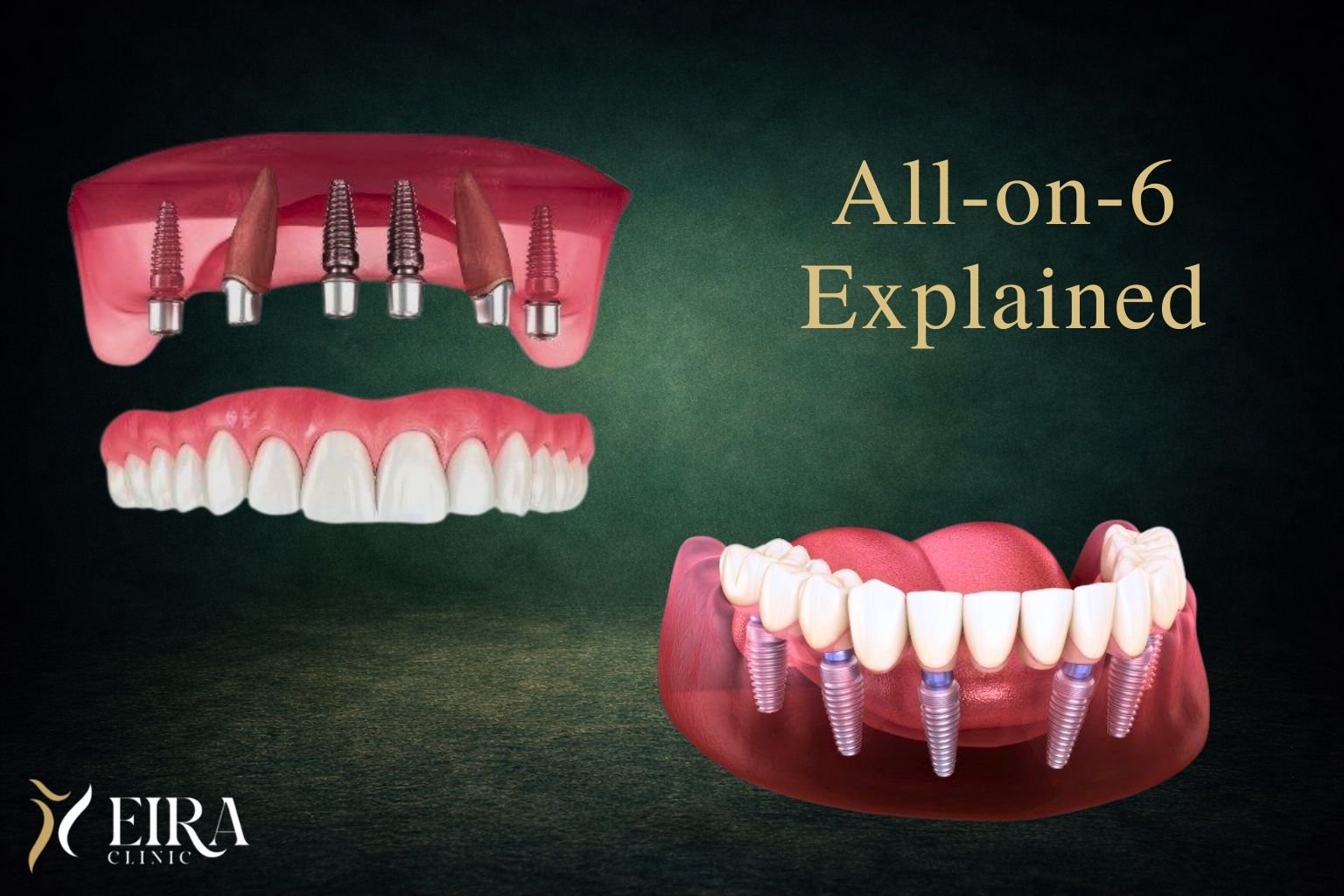
All-on-6 is a full-arch dental implant technique that uses six implants to support a fixed set of teeth in either the upper or lower jaw.
Implants are typically placed as:
- Two implants in the front
- Four implants distributed toward the back
This configuration provides a wider and more balanced foundation for the prosthetic teeth.
⸻
Why Some Patients Need All-on-6
Not every jaw behaves the same way.
All-on-6 is often recommended when:
- Bite forces are strong
- Bone volume allows optimal implant placement
- Long-term load distribution is a priority
- Maximum stability is desired
- The patient prefers a premium, long-term solution
In these cases, additional implants reduce stress on each implant.
⸻
Biomechanical Advantage of All-on-6
The main advantage of All-on-6 lies in force distribution.
With six implants:
- Chewing forces are spread more evenly
- Each implant carries less load
- Prosthetic flexing is reduced
- Long-term mechanical stability is improved
This can be especially important in the lower jaw or in patients with strong chewing muscles.
⸻
All-on-6 vs All-on-4: The Real Difference
The difference is not “better vs worse” —
it is appropriate vs inappropriate for a specific case.
- All-on-4 prioritizes strategic angulation and efficiency
- All-on-6 prioritizes load distribution and redundancy
Both can succeed — or fail — depending on diagnosis and planning.
⸻
Immediate Teeth with All-on-6
All-on-6 may also allow for immediate loading in suitable cases.
However, just like All-on-4:
- Immediate teeth are temporary
- Final prosthetics are placed after healing
- Healing protocols must be respected
Stability during the healing phase is essential.
⸻
Benefits of All-on-6
Patients often choose All-on-6 for:
- Enhanced stability
- Increased confidence during chewing
- Better long-term durability
- Reduced mechanical stress
- Peace of mind for the future
It is often considered a premium full-arch solution.
⸻
Are There Any Limitations?
All-on-6 requires:
- Adequate bone volume
- More surgical planning
- Slightly higher cost compared to All-on-4
However, when medically indicated, these factors are justified by improved long-term outcomes.
⸻
The Role of Digital Planning in All-on-6
Precise implant placement is critical.
Advanced planning includes:
- 3D CBCT imaging
- Digital bite analysis
- Prosthetic-driven implant positioning
- Evaluation of long-term forces
Without planning, even six implants can fail.
⸻
Long-Term Outlook and Maintenance
With proper care and follow-up, All-on-6 can:
- Provide excellent long-term function
- Maintain prosthetic stability
- Support facial structure
- Improve quality of life
Maintenance remains essential for success.
⸻
Frequently Asked Questions (FAQ)
Is All-on-6 stronger than All-on-4?
It can be, when additional stability and load distribution are needed.
Does everyone need All-on-6?
No. Many patients achieve excellent results with All-on-4.
Is All-on-6 more expensive?
Yes, due to additional implants and complexity, but it offers long-term value.
⸻
Final Thoughts
All-on-6 is not about excess —
it is about precision, balance, and longevity.
When chosen for the right reasons, it delivers exceptional stability and confidence for years to come.