Why Bone Quality Matters More Than Quantity
One of the most common misconceptions in implant dentistry is believing that bone volume alone determines whether dental implants are possible.
In reality, bone quality is often more important than bone quantity.
Understanding this difference is critical for:
- Implant success
- Long-term stability
- Avoiding complications
- Choosing the correct treatment approach
This article explains why bone quality matters — and how modern dentistry manages bone loss safely and predictably.
⸻
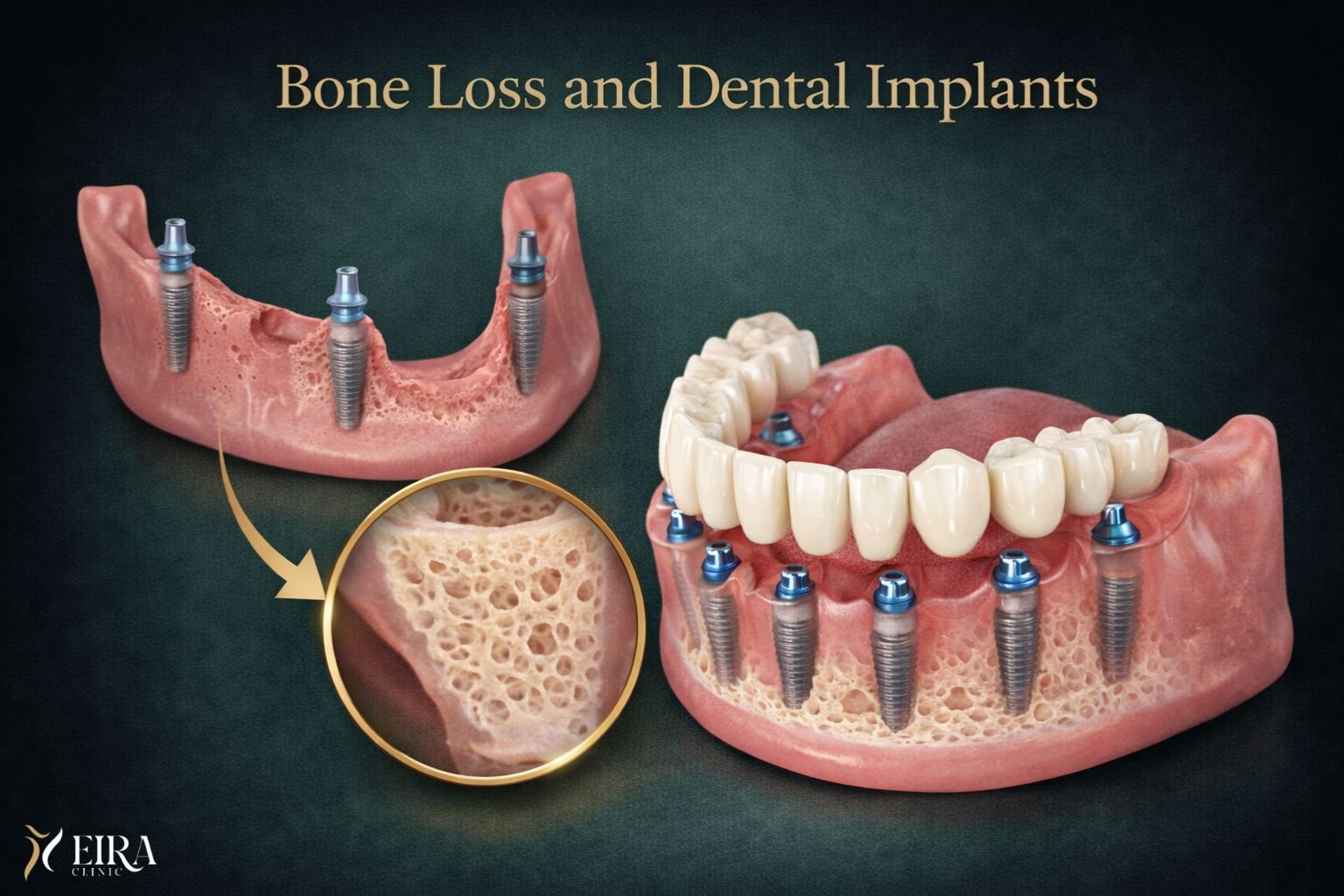
What Is Bone Loss After Tooth Loss?
When a tooth is lost, the jawbone no longer receives stimulation from chewing forces.
As a result, the bone begins to resorb (shrink) over time.
Bone loss can occur due to:
- Long-term missing teeth
- Gum disease (periodontitis)
- Trauma or infection
- Ill-fitting dentures
- Natural aging
This process is gradual but continuous if untreated.
⸻
Bone Quantity vs Bone Quality: What’s the Difference?
Bone Quantity
Refers to:
- Bone height
- Bone width
This determines whether there is enough space to place an implant.
⸻
Bone Quality
Refers to:
- Bone density
- Bone strength
- Ability to support chewing forces
This determines whether the implant can remain stable long-term.
A jaw may have enough bone volume —
but if the bone is soft or weak, implant success is compromised.
⸻
Why Bone Quality Is Critical for Implant Success
Dental implants rely on osseointegration — the direct bonding between bone and implant.
Poor bone quality can lead to:
- Reduced initial stability
- Delayed healing
- Increased micromovement
- Higher failure risk
High-quality bone provides:
- Strong implant anchorage
- Better force distribution
- Long-term stability
⸻
How Bone Quality Is Evaluated
Bone quality cannot be accurately judged by visual inspection alone.
Proper evaluation includes:
- 3D CBCT imaging
- Assessment of bone density
- Clinical evaluation during planning
- Bite force analysis
Advanced diagnostics allow dentists to plan implant placement safely — even in compromised bone.
⸻
Does Bone Loss Mean Implants Are Impossible?
No.
Modern implant dentistry offers multiple solutions for patients with bone loss, including:
- Bone grafting
- Sinus lift procedures
- Use of angled implants
- Selection of appropriate implant designs
- Adjusting implant number and distribution
Bone loss requires expert planning, not automatic exclusion.
⸻
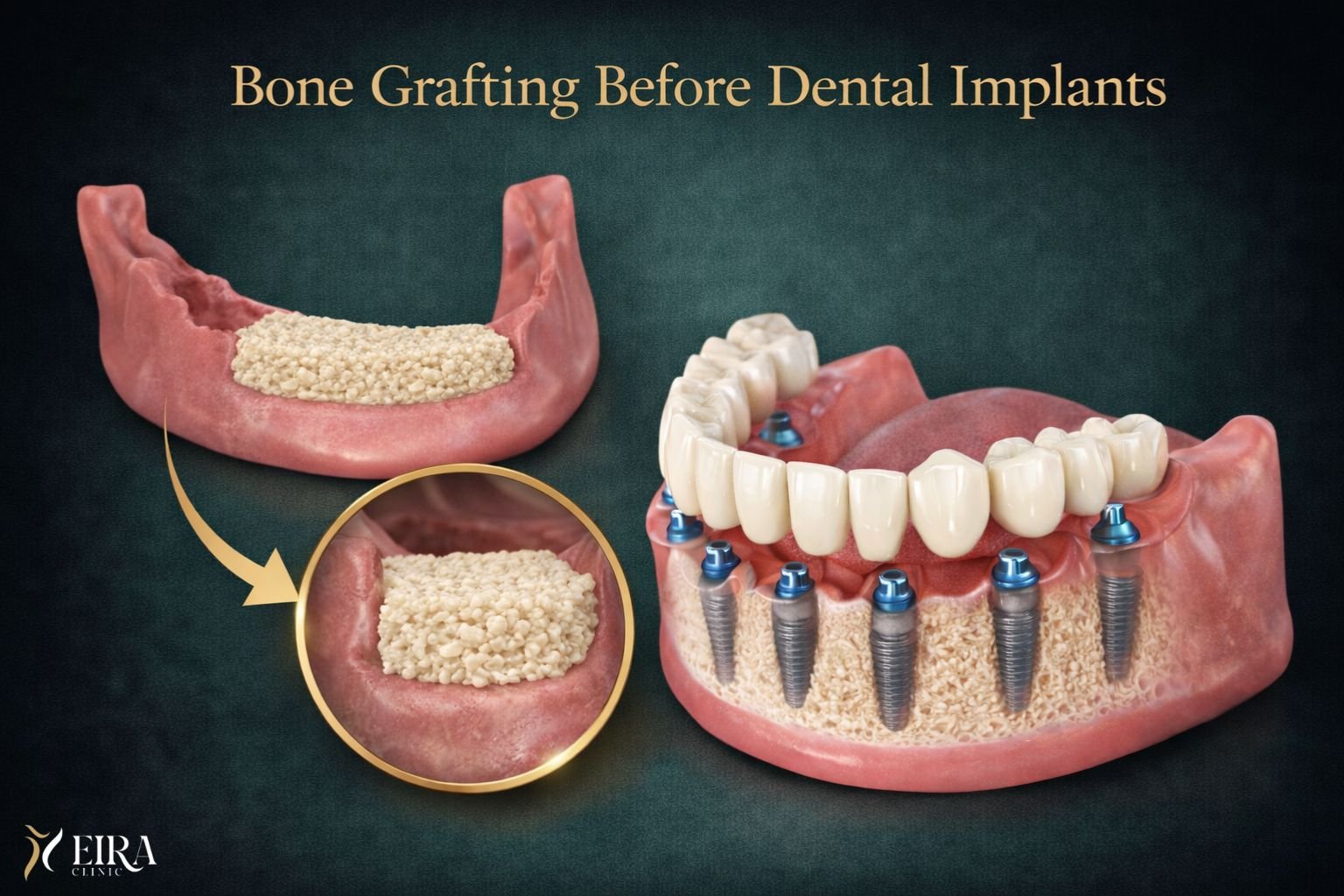
The Role of Bone Grafting
Bone grafting is often misunderstood as a complication.
In reality, it is a foundation-building procedure.
Bone grafting can:
- Restore lost bone volume
- Improve implant stability
- Allow correct implant positioning
- Enhance long-term outcomes
When performed correctly, grafted bone becomes part of the patient’s natural jaw.
⸻
Why Improper Planning Leads to Failure
Ignoring bone quality can result in:
- Implant overload
- Progressive bone loss
- Prosthetic instability
- Late implant failure
Placing implants “where bone exists” instead of “where bone should be” is a common mistake.
⸻
Long-Term Perspective: Bone Stability Over Time
Successful implant treatment is not measured in months —
it is measured in years and decades.
Stable bone supports:
- Implant longevity
- Prosthetic durability
- Facial structure preservation
Bone quality is the silent factor that determines long-term success.
⸻
Frequently Asked Questions (FAQ)
Can I get implants if I have bone loss?
Yes, in many cases — with proper planning and supportive procedures.
Is bone grafting safe?
Yes. When performed correctly, it is predictable and widely used.
Does bone quality improve after implants?
Yes. Functional implants help maintain bone through stimulation.
⸻
Final Thoughts
Bone loss does not end implant possibilities —
but it demands experience, planning, and respect for biology.
In advanced implant dentistry, bone quality guides decisions more than bone quantity.