Strength, Function, and Natural Aesthetics
Dental crowns are one of the most important restorations in modern dentistry —
not because they change how teeth look, but because they protect, reinforce, and restore function.
A well-designed crown should do three things at the same time:
- Restore strength
- Preserve long-term tooth health
- Look completely natural
This article explains what dental crowns are, when they’re needed, and how modern crowns achieve both durability and aesthetics.
⸻
What Is a Dental Crown?
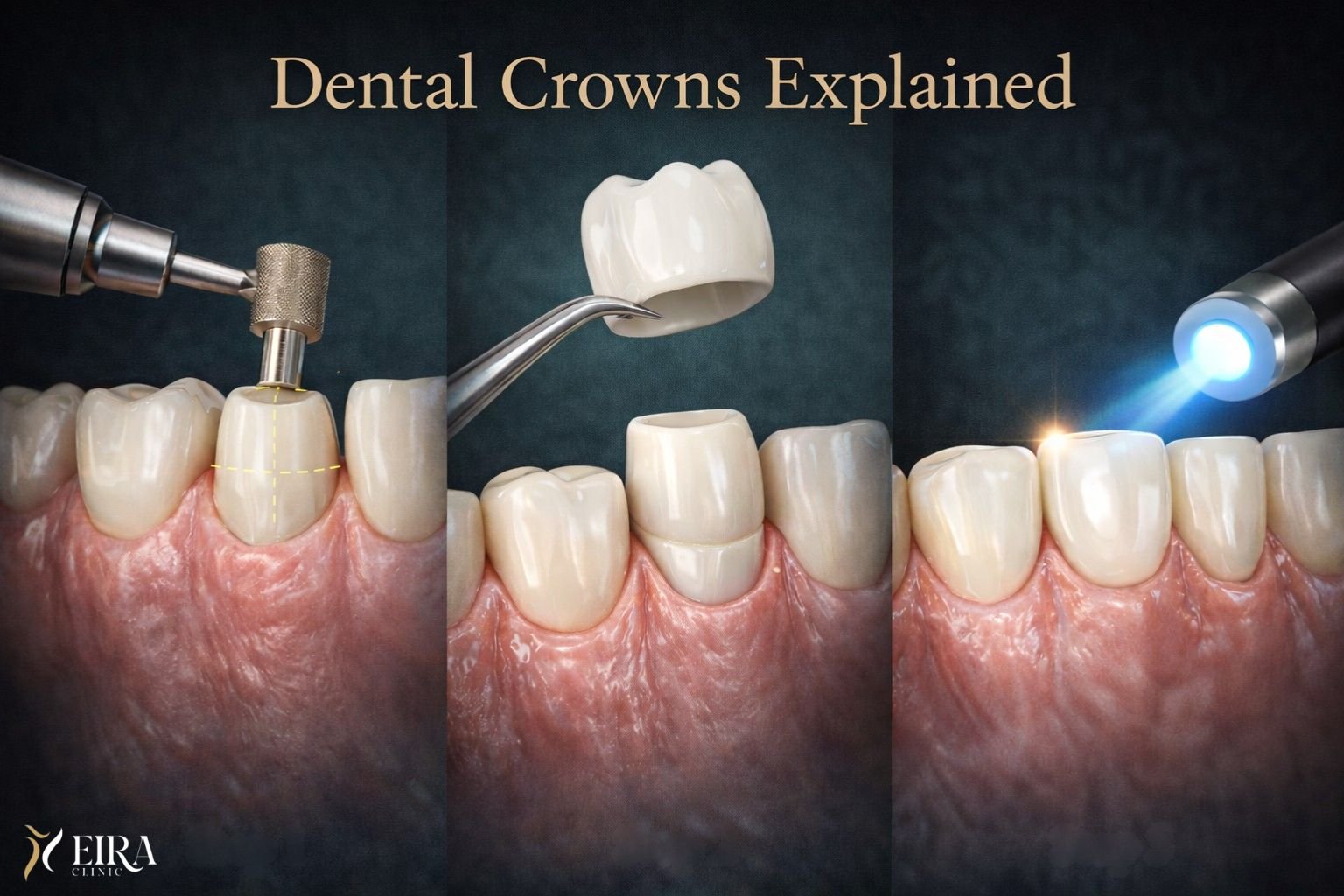
A dental crown is a full-coverage restoration that surrounds the entire visible portion of a tooth.
Crowns are used to:
- Restore damaged or weakened teeth
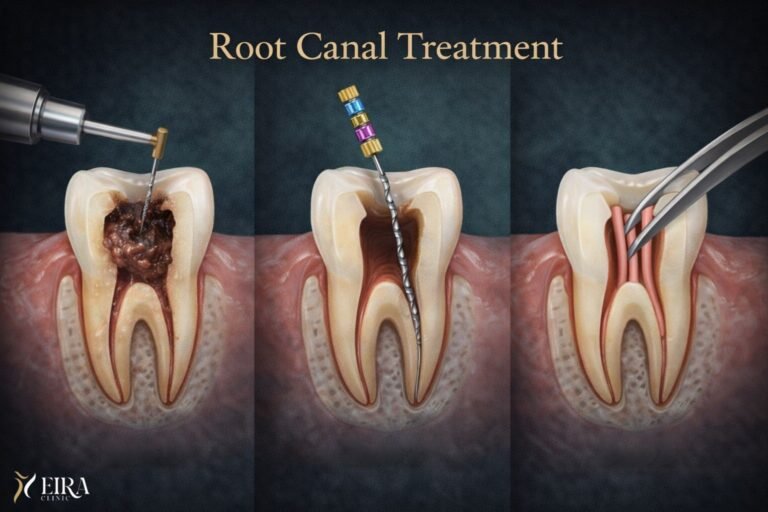
- Protect teeth after root canal treatment
- Support large fillings
- Improve shape and appearance
- Anchor bridges or implant restorations
Unlike veneers, crowns are primarily functional restorations with aesthetic benefits.
⸻
When Is a Dental Crown Necessary?
Crowns are recommended when a tooth:
- Has extensive decay
- Has large or failing fillings
- Is cracked or structurally weakened
- Has undergone root canal treatment
- Cannot support a veneer safely
In these cases, a crown protects the tooth from fracture and long-term failure.
⸻
Types of Dental Crowns
1️⃣ Zirconia Crowns
- Extremely strong and durable
- Excellent for back teeth and high bite forces
- Modern zirconia offers improved translucency
Often chosen for strength-first restorations.
⸻
2️⃣ Porcelain-Fused-to-Metal (PFM)
- Strong internal metal core
- Porcelain outer layer
- Less aesthetic than full ceramic options
Used less frequently today in aesthetic zones.
⸻
3️⃣ Full Ceramic / Porcelain Crowns
- Superior aesthetics
- Natural translucency
- Ideal for front teeth
Chosen when appearance is a top priority.
⸻
Strength vs Aesthetics: Finding the Balance
The best crown choice depends on:
- Tooth position
- Bite force
- Smile visibility
- Functional demands
Aesthetic zones require natural translucency.
High-load zones require maximum strength.
Advanced dentistry selects materials based on function first — aesthetics second.
⸻
Crown Preparation: Why Conservative Matters
Modern crown preparation focuses on:
- Preserving as much natural tooth structure as possible
- Maintaining proper margins
- Supporting long-term gum health
Over-preparation weakens teeth.
Under-preparation compromises crown fit.
Precision is essential.
⸻
Digital Dentistry and Crown Precision
Digital workflows improve crown outcomes through:
- Digital impressions
- CAD/CAM design
- Precise margin control
- Improved fit and comfort
Better fit means:
- Less irritation
- Lower decay risk
- Longer lifespan
⸻
Crowns on Natural Teeth vs Implants
On Natural Teeth
- Protect remaining tooth structure
- Restore strength
On Implants
- Replace missing teeth
- Designed to handle chewing forces
- Require different biomechanical planning
Each situation requires a tailored approach.
⸻
Longevity and Care of Dental Crowns
With proper care, crowns can last many years.
Key factors include:
- Good oral hygiene
- Regular dental check-ups
- Avoiding excessive biting forces
- Managing teeth grinding
Crowns protect teeth — but they still require maintenance.
⸻
Common Myths About Crowns
“Crowns always look fake.”
❌ Poor design looks fake. Good crowns look natural.
“Crowns weaken teeth.”
❌ Crowns strengthen compromised teeth when done correctly.
“Crowns are only cosmetic.”
❌ Crowns are primarily functional restorations.
⸻
Frequently Asked Questions (FAQ)
Do crowns hurt to place?
No. The procedure is performed under local anesthesia.
How long do crowns last?
Often 10–15 years or more with proper care.
Can a crowned tooth still decay?
Yes — hygiene and regular check-ups are essential.
⸻
Final Thoughts
Dental crowns are not shortcuts —
they are protective solutions designed to extend the life of natural teeth.
When planned correctly, they deliver:
- Strength
- Stability
- Natural aesthetics
- Long-term reliability