Immediate Teeth After Implants
What “Same-Day Teeth” Really Means — and What It Does NOT
“Same-day teeth.”
“Immediate teeth.”
“Walk out with a full smile in one day.”
These phrases are widely used in dental marketing —
but very few patients truly understand what they mean.
Immediate teeth can be an excellent option —
when used correctly and in the right cases.
This article explains the medical reality behind immediate loading, without exaggeration or sales language.
⸻
What Are Immediate Teeth?
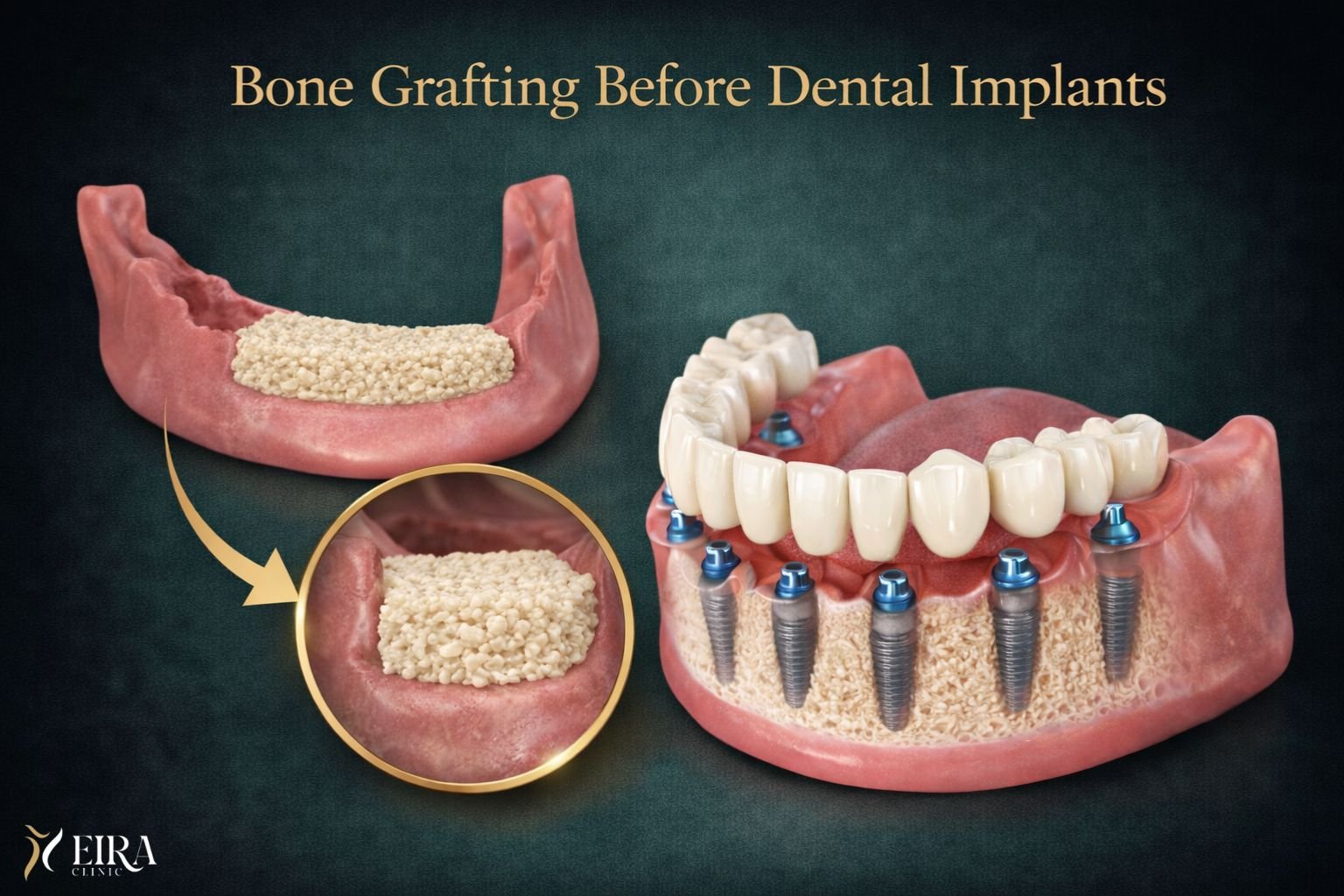
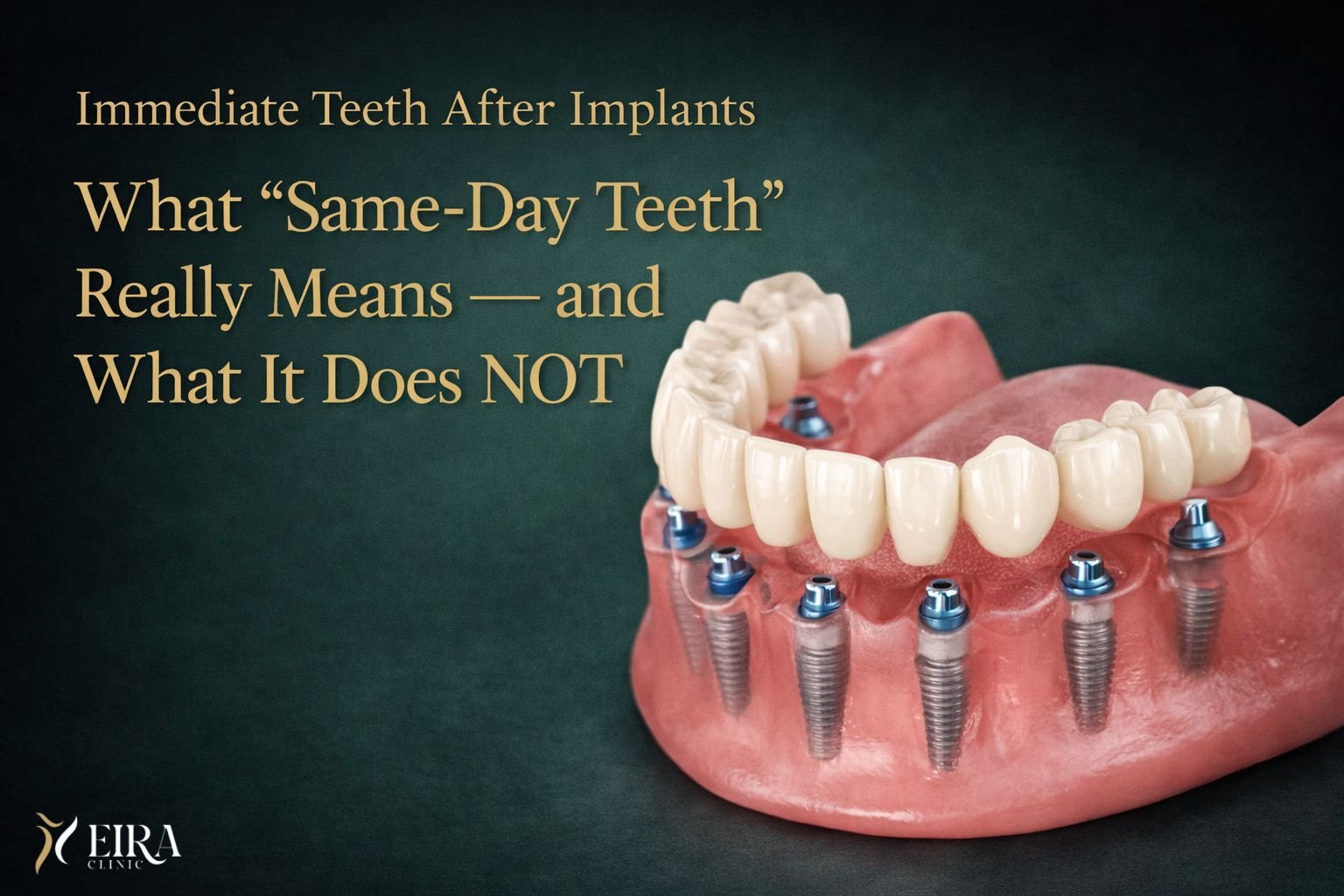
Immediate teeth refer to placing a temporary fixed prosthesis shortly after dental implant placement — often on the same day or within 24 hours.
This means:
- Implants are placed surgically
- A temporary fixed bridge is attached
- The patient leaves with non-removable teeth
⚠️ Important:
Immediate teeth are not the final teeth.
⸻
Immediate Teeth vs Final Teeth: The Critical Difference
One of the most common misunderstandings is assuming that same-day teeth are permanent.
Immediate (Temporary) Teeth
- Designed for appearance and light function
- Protect implants during healing
- Softer materials
- Limited chewing force allowed
Final Teeth
- Placed after full implant integration
- Stronger materials
- Designed for long-term function
- Precisely adjusted bite
Skipping this distinction increases failure risk.
⸻
When Immediate Teeth Are Medically Possible
Immediate loading is not guaranteed for every patient.
It depends on:
- Primary implant stability
- Bone quality and density
- Number and position of implants
- Bite force and habits
- Overall medical condition
If these conditions are not met, immediate loading may compromise success.
⸻
Why Immediate Teeth Can Be Beneficial
When done correctly, immediate teeth offer:
- Psychological comfort
- Immediate improvement in appearance
- Maintained social confidence
- Smooth transition to final restoration
For many patients, this improves quality of life during healing.
⸻
Why Immediate Teeth Can Also Be Risky
When used improperly, immediate loading can:
- Overload implants
- Disrupt osseointegration
- Cause implant failure
- Lead to prosthetic fractures
Immediate teeth are a medical tool, not a guarantee.
⸻
The Role of Bite Control During Healing
Healing implants must remain stable.
This is why patients with immediate teeth are instructed to:
- Eat soft foods
- Avoid hard or sticky textures
- Follow strict dietary guidance
- Attend follow-up appointments
Ignoring these instructions is one of the main causes of complications.
⸻
Not All Clinics Approach Immediate Teeth the Same Way
Some clinics promise same-day teeth for every patient.
This is a red flag.
A responsible approach evaluates:
- Whether immediate loading is safe
- Whether delayed loading offers better outcomes
- Which option protects implants long-term
Saying “no” when necessary is part of ethical dentistry.
⸻
How Digital Planning Makes Immediate Teeth Safer
Advanced planning includes:
- 3D CBCT imaging
- Digital implant positioning
- Bite simulation
- Prosthetic-driven design
This reduces risk and improves predictability when immediate teeth are used.
⸻
Frequently Asked Questions (FAQ)
Are immediate teeth permanent?
No. They are temporary and replaced after healing.
Can I chew normally with immediate teeth?
No. Chewing must be limited during the healing phase.
What happens if immediate teeth are not possible?
Delayed loading may be recommended for safer outcomes.
⸻
Final Thoughts
Immediate teeth can be a powerful part of implant treatment —
but only when used selectively, carefully, and responsibly.
True success comes not from speed, but from stability and planning.