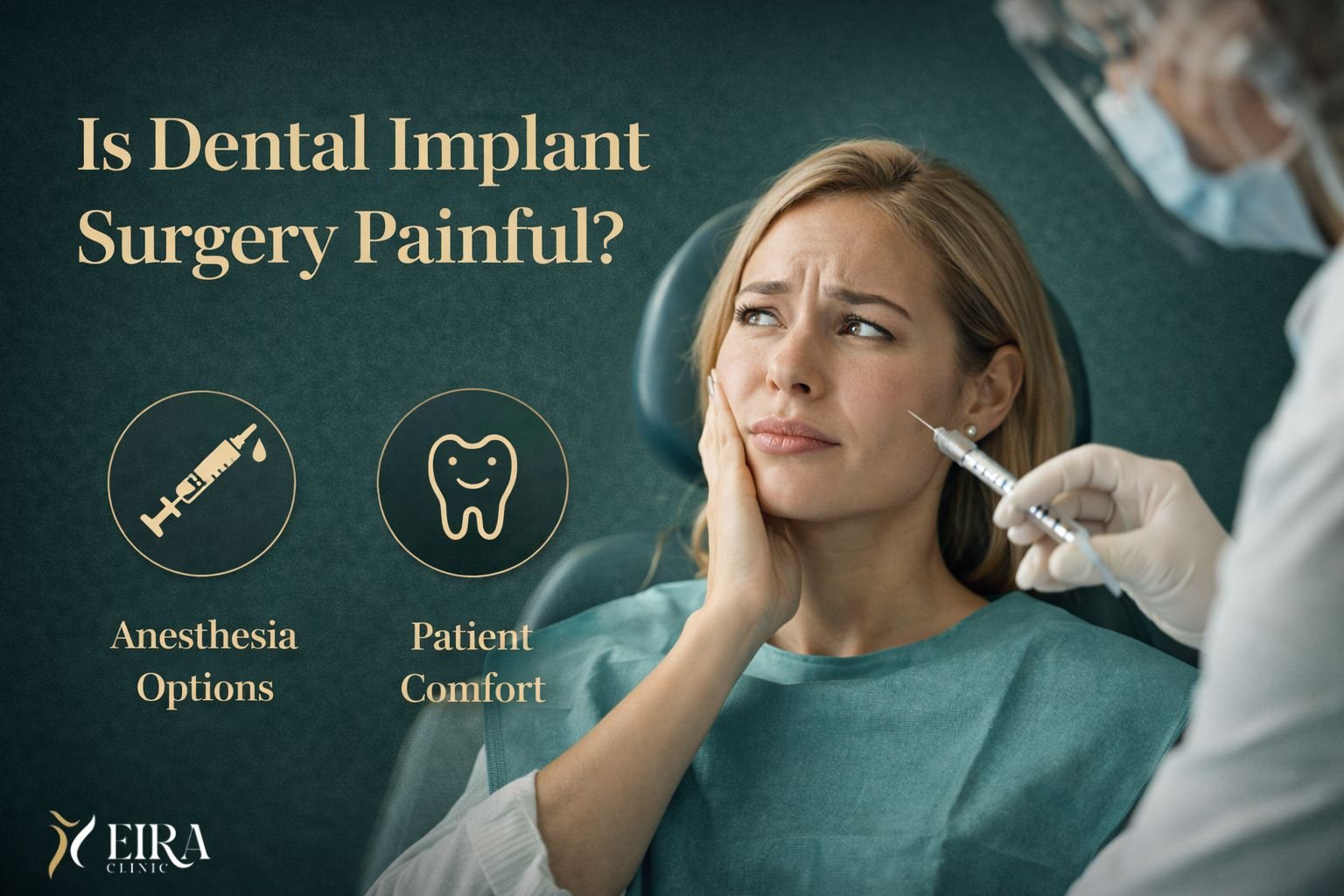
What Patients Really Experience — Not What They Fear
Fear of pain is one of the main reasons patients delay dental implant treatment.
Unfortunately, much of this fear comes from outdated stories, misinformation, or past dental experiences that no longer reflect modern implant dentistry.
The reality is simple:
Dental implant surgery is far less painful than most patients expect.
This article explains what patients actually experience — before, during, and after implant surgery.
⸻
Why Implant Surgery Sounds Scarier Than It Is
The word “surgery” often triggers anxiety.
But dental implant placement today is:
- Minimally invasive
- Carefully planned
- Performed under effective local anesthesia
- Guided by digital technology
In many cases, implant surgery is more comfortable than tooth extraction.
⸻
What Happens During Dental Implant Surgery?
Before the procedure begins:
- The area is completely numbed with local anesthesia
- Pain receptors are effectively blocked
- The patient remains comfortable and relaxed
During surgery:
- Pressure may be felt, but pain is not
- The procedure is precise and controlled
- Most patients are surprised by how quick it feels
Pain during surgery is not normal.
If discomfort occurs, anesthesia is adjusted immediately.
⸻
Does Everyone Feel the Same Level of Discomfort?
Pain perception varies slightly from person to person, but most patients report:
- Little to no pain during the procedure
- Mild soreness afterward
- Discomfort comparable to a routine dental extraction
Severe pain is not typical and should always be addressed.
⸻
What to Expect After Implant Surgery
After anesthesia wears off, patients may experience:
- Mild swelling
- Slight tenderness
- Temporary soreness
These effects are usually:
- Short-lived
- Well controlled with prescribed medication
- Significantly reduced with proper aftercare
Most patients return to normal daily activities within a short period.
⸻
Why Modern Implant Surgery Is More Comfortable
Several factors have dramatically improved patient comfort:
✔ Digital Planning
3D CBCT scans allow precise implant placement, minimizing tissue trauma.
✔ Minimally Invasive Techniques
Smaller incisions mean faster healing and less discomfort.
✔ Proper Case Selection
Implants placed in suitable conditions heal more comfortably.
✔ Clear Post-Operative Instructions
Good guidance prevents unnecessary pain and complications.
⸻
Pain vs Healing: Understanding the Difference
Discomfort after implant surgery is usually part of the healing process, not a sign of failure.
Normal healing sensations include:
- Tightness
- Mild pressure
- Sensitivity
Pain that worsens instead of improving should always be evaluated.
⸻
Common Myths About Implant Pain
“Implant surgery is extremely painful.”
❌ False. Most patients rate it as mild or moderate discomfort.
“The pain lasts for weeks.”
❌ False. Discomfort typically peaks early and decreases steadily.
“Implants hurt more than extractions.”
❌ In many cases, extractions are more uncomfortable.
⸻
When Should You Be Concerned?
You should contact your dentist if you experience:
- Increasing pain after several days
- Severe swelling
- Signs of infection
- Fever
Prompt evaluation ensures proper healing and peace of mind.
⸻
Frequently Asked Questions (FAQ)
Will I feel pain during the surgery?
No. Local anesthesia ensures comfort throughout the procedure.
How long does post-surgery discomfort last?
Usually a few days, gradually improving.
Can I go to work after implant surgery?
Many patients return to light activities the same or next day.
⸻
Final Thoughts
Fear should never prevent you from receiving the treatment you need.
Modern dental implant surgery is:
- Comfortable
- Predictable
- Carefully managed
Most patients say the same thing afterward:
“I wish I had done this sooner.”