Saving Teeth, Not Removing Them
For many patients, the words “root canal” trigger fear — pain, discomfort, or long appointments.
In reality, modern root canal treatment is a tooth-saving procedure, not something to fear.
Root canal therapy exists for one reason:
to eliminate infection while preserving your natural tooth.
⸻
What Is Root Canal Treatment?
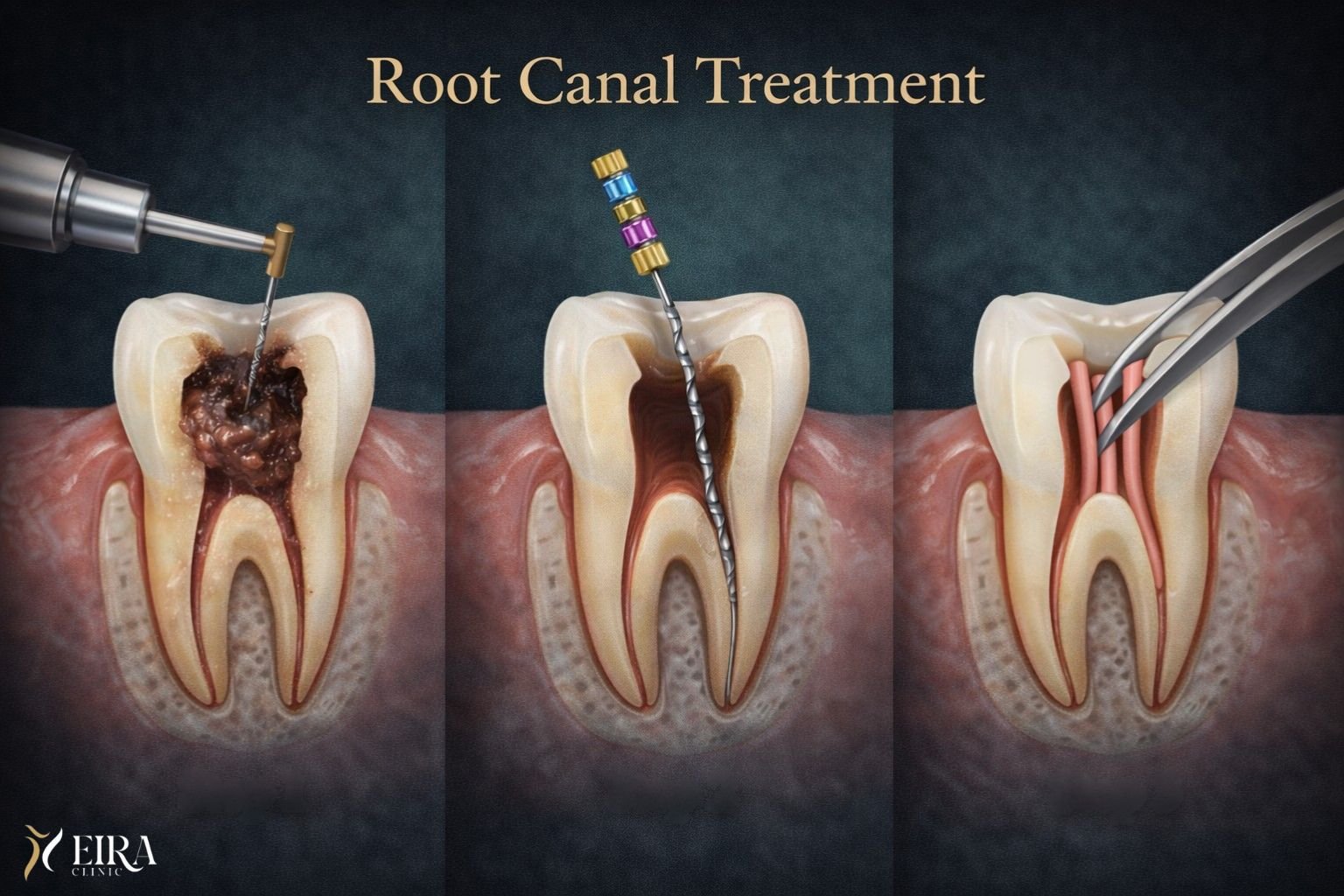
Root canal treatment is a procedure that removes:
- Infected or inflamed pulp tissue
- Bacteria inside the tooth
- Internal debris causing pain or infection
After cleaning and disinfection, the tooth is sealed to prevent reinfection.
The structure of the tooth is preserved — only the infected tissue is removed.
⸻
Why Root Canal Treatment Is Necessary
Root canal therapy is needed when the pulp becomes infected due to:
- Deep tooth decay
- Cracks or fractures
- Trauma to the tooth
- Repeated dental procedures
- Advanced gum disease
Without treatment, infection can spread to surrounding bone and tissues.
⸻
Common Symptoms That Indicate a Root Canal Is Needed
You may need root canal treatment if you experience:
- Persistent tooth pain
- Sensitivity to hot or cold
- Swelling around the tooth or gums
- Pain when biting or chewing
- Darkening of the tooth
Some infections may progress without pain, which is why X-rays are essential.
⸻
Is Root Canal Treatment Painful?
Modern root canal treatment is not painful.
With current anesthesia and techniques:
- The procedure feels similar to a regular filling
- Pain comes from the infection — not the treatment
- Relief often begins immediately after treatment
Root canal therapy removes pain, it does not cause it.
⸻
What Happens During the Procedure?
1️⃣ Local anesthesia is applied
2️⃣ The tooth is isolated and accessed
3️⃣ Infected tissue is removed
4️⃣ The canals are cleaned and disinfected
5️⃣ The tooth is sealed
In many cases, a crown is placed afterward to protect the tooth.
⸻
Why Saving the Natural Tooth Matters
Keeping your natural tooth:
- Preserves chewing efficiency
- Maintains jawbone stability
- Prevents shifting of neighboring teeth
- Is more cost-effective long-term
No artificial replacement matches a natural tooth when it can be saved.
⸻
Root Canal vs Tooth Extraction
Root Canal Treatment
- Preserves the natural tooth
- Maintains bone and bite alignment
- Faster recovery overall
Tooth Extraction
- Creates a missing tooth
- May require implants or bridges
- Can lead to bone loss
Whenever possible, saving the tooth is the preferred option.
⸻
What Happens After a Root Canal?
After treatment:
- Pain and infection resolve
- A crown may be recommended for protection
- The tooth functions normally
With proper restoration and hygiene, treated teeth can last many years.
⸻
Common Myths About Root Canal Treatment
“Root canals are extremely painful.”
❌ False. Modern treatment is comfortable.
“It’s better to remove the tooth.”
❌ Saving the tooth is usually better for oral health.
“Root canal teeth don’t last.”
❌ Properly restored teeth can last decades.
⸻
Frequently Asked Questions (FAQ)
How long does a root canal take?
Usually one or two visits, depending on the case.
Will I need antibiotics?
Only if infection has spread beyond the tooth.
Is a crown always necessary afterward?
Often yes, especially for back teeth.
⸻
Final Thoughts
Root canal treatment is not about pain —
it’s about preservation.
Saving your natural tooth protects:
- Your bite
- Your bone
- Your long-term oral health
Modern dentistry focuses on conservation, not removal.