What Works, What Doesn’t, and What’s Truly Safe
Teeth whitening is one of the most requested cosmetic dental treatments worldwide —
but it’s also one of the most misunderstood.
With countless products, ads, and “instant results” promises, patients often ask:
What actually works? What’s safe? And what’s just marketing?
This article breaks down teeth whitening scientifically and honestly.
⸻
Why Teeth Change Color in the First Place
Tooth discoloration happens for several reasons, including:
- Natural aging of enamel
- Coffee, tea, red wine, and smoking
- Certain medications
- Trauma to teeth
- Genetics
Not all discoloration responds the same way to whitening — and this matters.
⸻
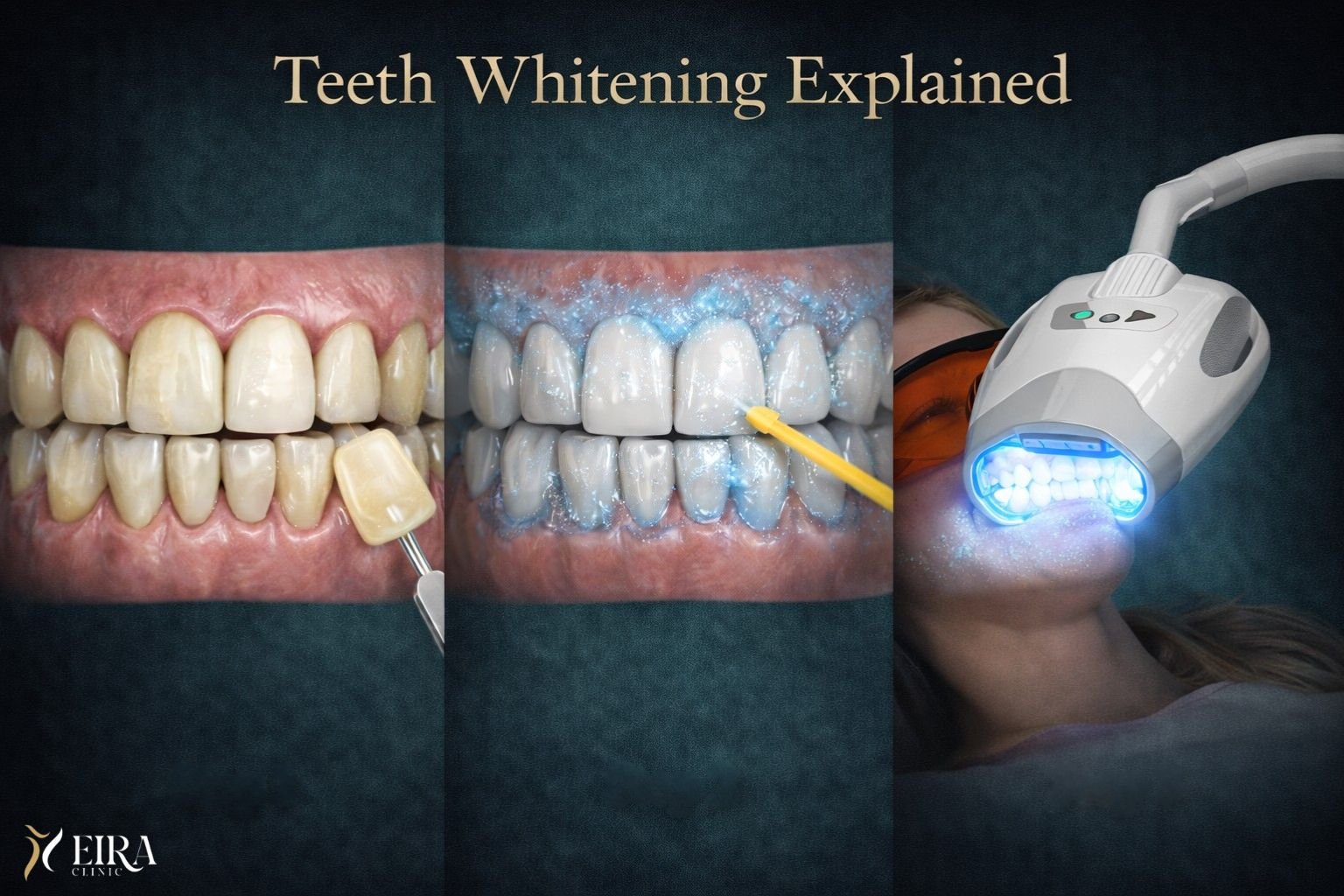
How Professional Teeth Whitening Works
Professional whitening uses controlled bleaching agents that penetrate enamel to break down stain molecules.
Unlike surface products, clinical whitening:
- Reaches deep stains
- Produces predictable results
- Is customized to tooth sensitivity
- Protects enamel and gums
This is why professional treatment remains the gold standard.
⸻
Types of Teeth Whitening Treatments
1️⃣ In-Office Professional Whitening
- Fast and powerful
- Performed under professional supervision
- Results visible in a single session
- Ideal for patients seeking immediate improvement
This method offers maximum control and safety.
⸻
2️⃣ Take-Home Professional Whitening
- Custom trays made for the patient
- Gradual whitening over days or weeks
- Excellent for maintaining results
- Lower sensitivity risk
Often combined with in-office treatment for optimal results.
⸻
3️⃣ Over-the-Counter Products
Includes strips, gels, toothpaste, and pens.
Limitations:
- Lower concentration
- Uneven results
- Limited effect on deeper stains
- Higher misuse risk
These products may offer mild improvement but cannot match clinical whitening.
⸻
What Teeth Whitening Cannot Do
Whitening does not:
- Change the color of crowns or veneers
- Fix intrinsic discoloration in all cases
- Replace restorative or aesthetic treatments
This is why professional assessment is essential before whitening.
⸻
Is Teeth Whitening Safe?
When done correctly, yes.
Professional whitening is safe because:
- Concentration is controlled
- Gums are protected
- Sensitivity is managed
- Enamel integrity is preserved
Problems usually arise from overuse or improper application, not whitening itself.
⸻
Sensitivity: What’s Normal and What’s Not
Temporary sensitivity is common and usually:
- Mild
- Short-lived
- Manageable
Severe or prolonged sensitivity often indicates:
- Improper technique
- Excessive product use
- Pre-existing dental issues
Professional guidance prevents unnecessary discomfort.
⸻
Whitening vs Veneers: Knowing the Difference
Whitening
- Lightens natural tooth color
- Non-invasive
- Ideal for color correction
Veneers
- Change color, shape, and form
- Used when whitening isn’t sufficient
- Aesthetic restoration, not bleaching
Choosing the right approach prevents disappointment.
⸻
How Long Do Whitening Results Last?
Longevity depends on:
- Diet and habits
- Oral hygiene
- Smoking
- Maintenance whitening
Results can last months to years with proper care.
⸻
Frequently Asked Questions (FAQ)
Does whitening damage enamel?
No — when done professionally.
Can everyone whiten their teeth?
Most patients can, but evaluation is necessary.
How white is “too white”?
Natural harmony matters more than extreme brightness.
⸻
Final Thoughts
Teeth whitening is effective —
but only when expectations, technique, and biology align.
Professional whitening delivers:
- Safe results
- Natural brightness
- Controlled outcomes
The goal isn’t artificial white —
it’s a healthy, confident smile.